


Tau PET has become one of the most interesting imaging biomarkers in Alzheimer’s disease.
Amyloid plaque burden imaged using PET shows that it can accumulate years before symptoms. Tau PET, by contrast, tends to align more closely with where the brain is failing and how cognition is declining. This observation has shaped the field. Based on findings that tau burden and distribution are more closely associated with cognitive impairment and disease stage than amyloid plaque burden [1], why don’t we directly target tau?
That is the assumption the ceperognastat trial forces us to examine.
Ceperognastat is an oral drug designed to inhibit O-GlcNAcase, also called OGA. OGA is an enzyme that removes a small sugar-like chemical tag, called O-GlcNAc, from proteins inside cells. The idea was that blocking OGA would keep more O-GlcNAc on tau, reduce tau phosphorylation and aggregation, and slow Alzheimer’s disease progression. [2]
The rationale was plausible. But plausibility is not proof.
PROSPECT-ALZ
PROSPECT-ALZ was a large, expensive Phase 2 program. It enrolled 327 participants with early symptomatic Alzheimer’s disease, ran at 72 sites in 5 countries, used tau PET screening/enrichment, MRI, plasma biomarkers, repeated clinical assessments, randomized to placebo, low-dose ceperognastat, or high-dose ceperognastat, and followed participants for up to 76–124 weeks, with an extension period.
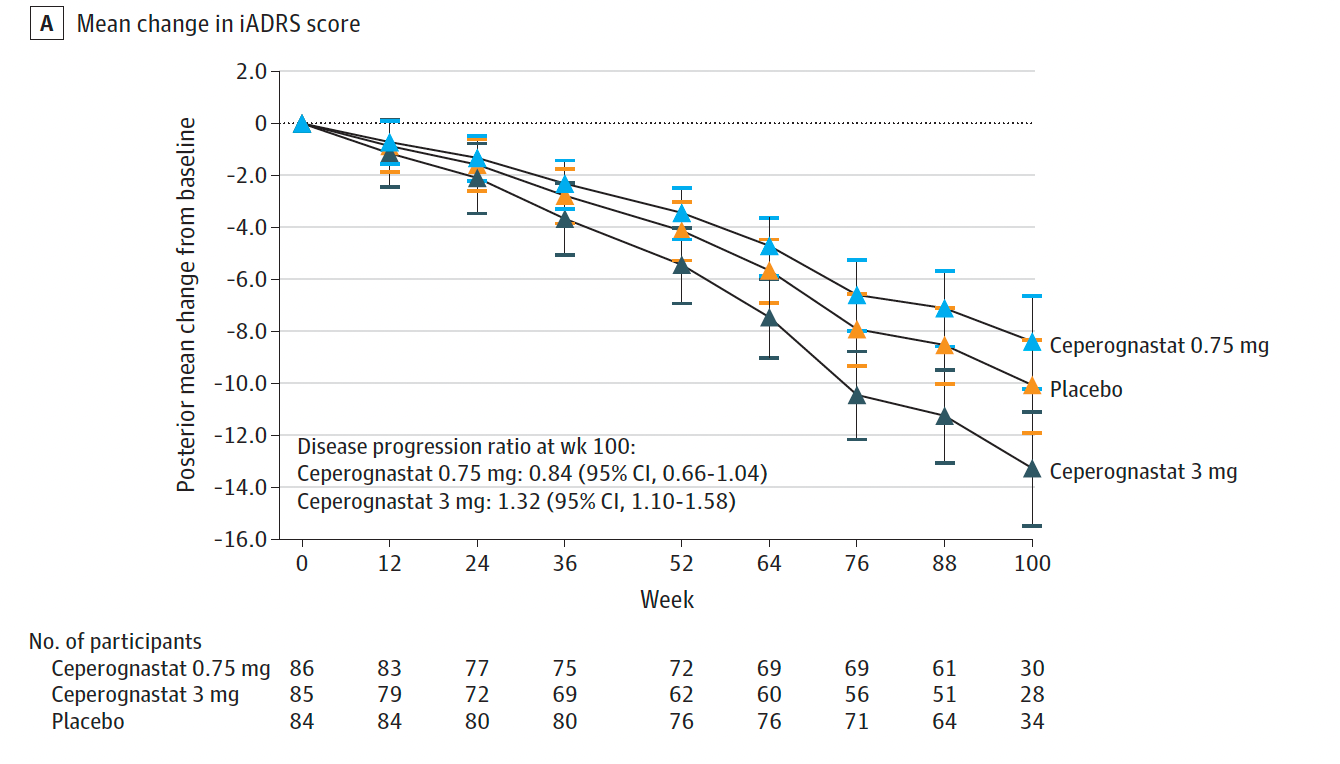
The trial did not show clinical benefit. In the primary outcome population, the low-dose group had no clinically meaningful improvement over placebo, and the high-dose group showed 32% greater clinical progression than placebo on the Integrated Alzheimer’s Disease Rating Scale at 100 weeks (Figure 1).
Some biomarker measures moved in directions that could have appeared favorable, including less whole-brain volume loss and a smaller increase in tau PET signal in one brain region Figure 2. [3]
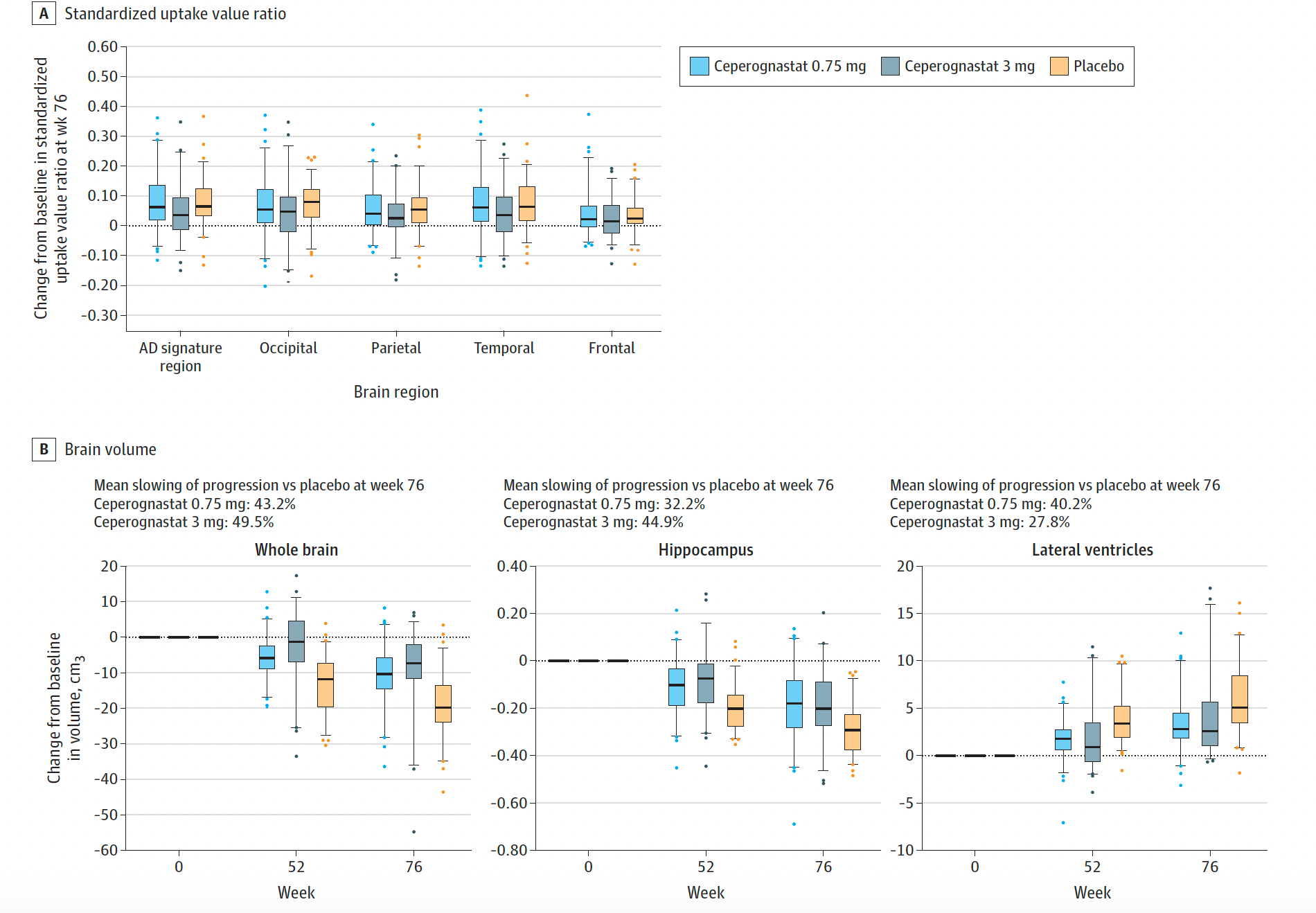
This is the central lesson: a biomarker can track disease without proving that modifying it will improve cognition.
The Correlation–Causation Problem
The strongest argument for tau as a therapeutic target comes from human observational data. Tau PET burden and distribution correlate more closely with cognitive impairment and clinical stage than amyloid plaque burden. That makes tau PET valuable for staging disease, selecting participants for trials, and estimating risk of progression. [1]
But correlation is not causation.
A marker of disease severity is not automatically the mechanism that must be modified to improve the disease. In Alzheimer’s disease, tau pathology could play several roles. It may directly injure neurons. It may amplify stress initiated by amyloid, inflammation, vascular injury, or endolysosomal dysfunction. It may reflect a cellular response to injury. Or it may mark neurons that are already failing.
These possibilities lead to different therapeutic predictions.
If tau is a direct and reversible driver of neuronal death, lowering tau should help preserve neurons and cognition. If tau is downstream of a broader cellular failure, lowering tau may improve tau biomarkers without restoring the injured system that produced the tau pathology in the first place.
Ceperognastat does not prove that tau is irrelevant. It shows that changing tau-related biology through broad OGA inhibition did not produce clinical benefit in early symptomatic Alzheimer’s disease. [3]
Genetic Tauopathies Are Not the Same as Alzheimer’s Disease
There are diseases where tau has a stronger causal role.
MAPT is the gene that encodes the tau protein. In some inherited frontotemporal dementias and related primary tauopathies, mutations in MAPT alter tau itself. Some mutations change the tau protein sequence. Others alter tau splicing, which changes the balance of tau isoforms. These changes can make tau more prone to misfolding, aggregation, or toxic dysfunction. In these diseases, tau biology is closer to the root cause of neurodegeneration. [4]
Alzheimer’s disease is different.
Most patients with late-onset Alzheimer’s disease do not have MAPT mutations. AD is not usually a disease of genetically overexpressed tau. It is a disease in which tau pathology emerges in the setting of amyloid, endolysosomal stress, immune activation, vascular injury, metabolic dysfunction, synaptic failure, and aging.
This distinction matters because many preclinical tau models rely on high expression of mutant human tau. One common model, rTg4510, overexpresses human tau carrying the P301L mutation. P301L means that one amino acid in tau — proline at position 301 — is replaced by leucine. This mutation pushes the system toward tau pathology. It is useful for testing whether a drug changes tau aggregation, but it does not reproduce the full biology of sporadic Alzheimer’s disease. [4,5]
A mutant tau overexpression model asks one question:
Can this drug change tau aggregation biology?
A human Alzheimer’s trial asks a broader question:
Can this drug preserve neurons, synapses, networks, and cognition in a multifactorial disease of aging?
Those are not the same question.
Tau Production, Tau Aggregation, and Tau Spread Are Different Targets
One reason tau drug development is difficult is that “targeting tau” can mean several different things.
Tau production means how much tau protein a cell makes. The MAPT gene is copied into MAPT mRNA, and that RNA message is used to produce tau protein.
Tau aggregation means tau proteins begin to misfold and clump together into abnormal species, including oligomers, fibrils, and eventually neurofibrillary tangles.
Tau spread refers to the observation that tau pathology appears to move through connected brain networks as Alzheimer’s disease progresses.
A drug can target one step without fixing the others.
An antisense oligonucleotide, or ASO, is a short synthetic strand of nucleic acid designed to bind a specific RNA message. A tau ASO binds MAPT mRNA, the message used to make tau protein, and promotes its degradation or blocks its translation. In plain English, a tau ASO reduces tau production. [8,9]
OGA inhibitors do something different. They do not reduce tau production. They try to change tau’s chemical state after tau has already been made by increasing O-GlcNAcylation, with the hope that tau becomes less likely to phosphorylate, aggregate, or spread. [2]
This distinction matters. A tau ASO tests whether reducing total tau production helps. An OGA inhibitor tests whether changing tau modification helps. These are related but not identical hypotheses.
Why the Ceperognastat Rationale Looked Appealing
The rationale for ceperognastat followed a clear biological sequence.
Tau is regulated by post-translational modifications. One of these is O-GlcNAcylation, the addition of a small O-GlcNAc tag to serine or threonine residues on proteins. OGA removes this tag. Inhibiting OGA increases O-GlcNAcylation. [2,6]
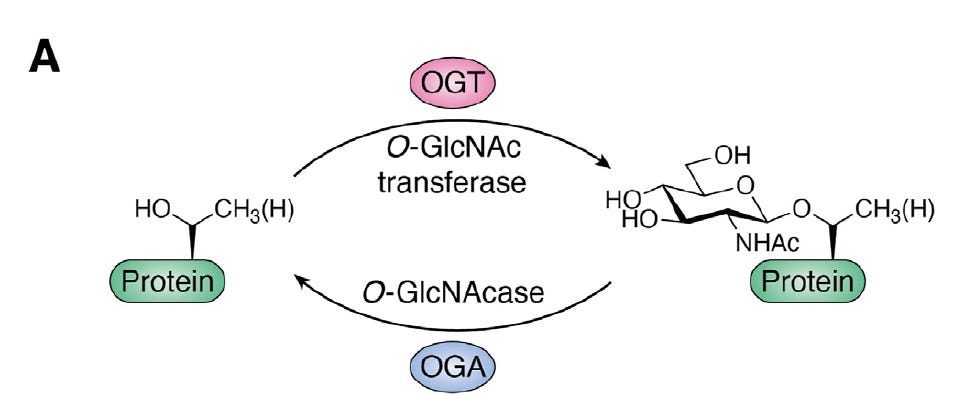
Because tau phosphorylation and O-GlcNAcylation can interact, OGA inhibition was proposed as a way to shift tau away from pathological phosphorylation and aggregation. In animal tauopathy models, OGA inhibition increased tau O-GlcNAcylation and reduced some measures of tau pathology. [2,4,5]
Ceperognastat was then optimized as a potent, orally available, CNS-penetrant OGA inhibitor. Phase 1 studies showed high brain OGA occupancy in humans. OGA occupancy means the percentage of OGA enzyme molecules bound by the drug. High occupancy shows that the drug entered the brain and engaged its target. In ceperognastat studies, brain OGA occupancy above 95% was reported. [2]
But there is a gap between target engagement and disease modification.
Disease modification, explained in greater detail before, means changing the underlying biology of the disease in a way that slows future decline. In Alzheimer’s disease, a disease-modifying therapy should ultimately preserve cognition, daily function, synapses, neurons, or brain networks over time.
Showing that a drug reaches the brain and binds OGA is important. It does not prove that the intervention improves neuronal function. It does not prove that the dose is safe for synapses. It does not prove that modifying tau-related chemistry will alter the clinical trajectory of Alzheimer’s disease.
This is where the evidentiary foundation appears limited.
The Preclinical Data Answered a Narrow Question
The preclinical work showed that OGA inhibition could reduce tau pathology in tauopathy mouse models. That is meaningful, but narrow.
In rTg4510 mice, chronic OGA inhibition reduced aggregated tau, several phosphorylated tau species in insoluble brain fractions, and CSF total tau. These are pharmacodynamic effects on tau biology (Figure 4). But rTg4510 mice overexpress mutant human tau. They do not reproduce the full biology of late-onset Alzheimer’s disease. [4]. And the investigators missed behavioral readouts.
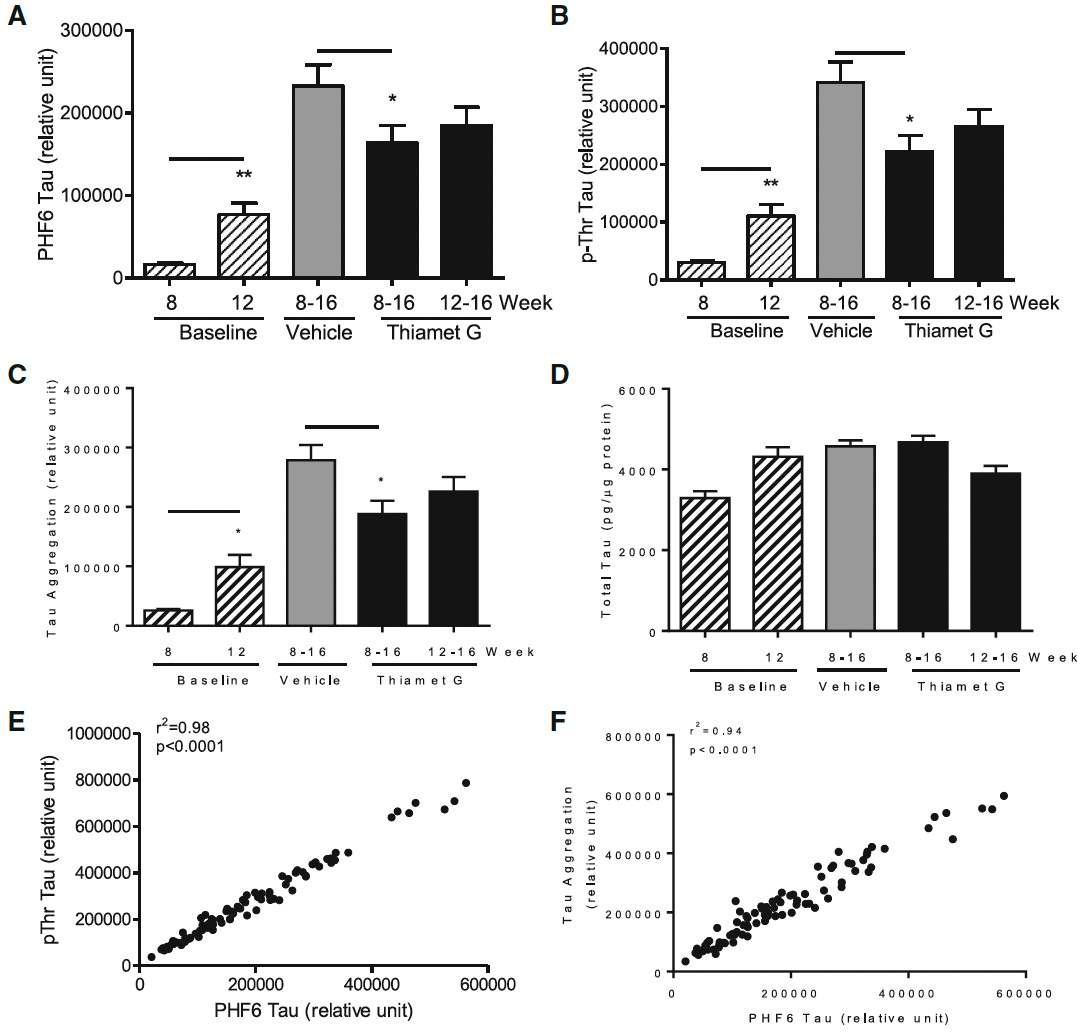
This is a recurring problem in Alzheimer’s drug development. Animal models are often interpreted beyond the question they were designed to answer. A model can be useful for testing target biology and still be limited for predicting clinical benefit.
The relevant limitation is not that the tau mouse data were wrong. The limitation is that they did not establish that broad OGA inhibition would preserve synaptic function and cognition in cell and animal models before they went to human AD.
That should have been a higher bar before moving into a large and expensive clinical program. The unfortunate implications of null trials are decreased investment.
OGA Is Not a Tau-Specific Target
The failure of ceperognastat may also reflect the biology of the target.
OGA does not act only on tau. O-GlcNAcylation regulates many nuclear and cytoplasmic proteins involved in metabolism, stress responses, cell signaling, survival, protein turnover, transcription, and synaptic function. [2,6]
This matters because cognition depends on synaptic physiology, not only on pathology markers.
If a drug reduces a tau signal but disrupts synaptic transmission or plasticity, the net clinical effect may be neutral or harmful. The phase 2 trial raises this concern because high-dose ceperognastat was associated with worse clinical progression despite some biomarker changes that did not look unfavorable. [3]
A later brain-slice study came too late for the Lilly-sponsored trial. Investigators tested three structurally distinct OGA inhibitors — ceperognastat, ASN90, and MK8719 — in adult mouse hippocampal slices. All three suppressed short-term synaptic plasticity and long-term potentiation, or LTP (Figure 5). LTP is one of the experimental measures scientists use to study how synapses strengthen during learning. The same study also reported altered synaptic protein markers, including PSD-95 and synaptophysin 1. [7]
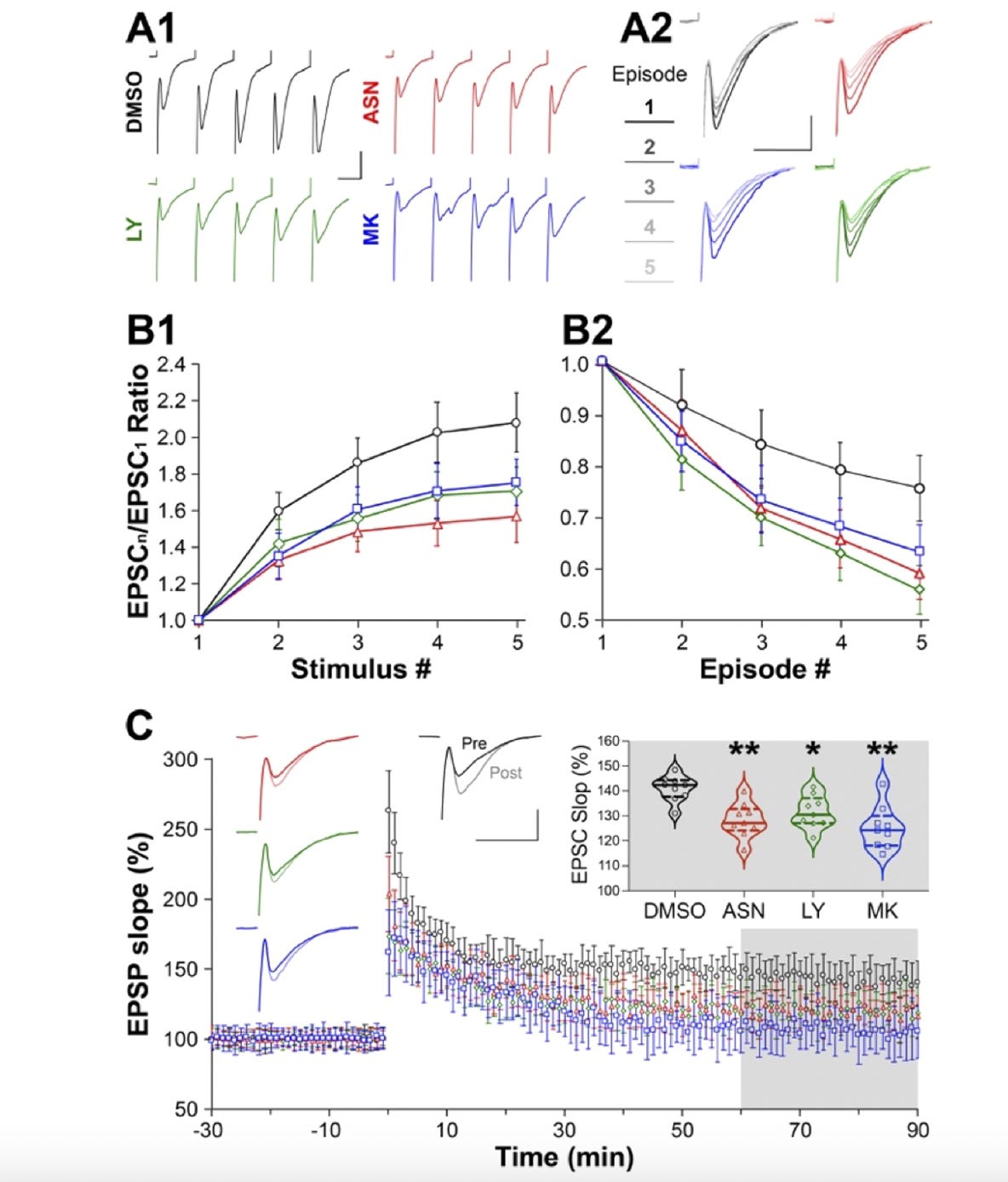
This experiment does not prove that synaptic toxicity caused the clinical outcome in PROSPECT-ALZ. But it identifies exactly the kind of functional risk that should be assessed early in CNS drug development, before moving to expensive Phase II or Phase III trials.
For Alzheimer’s disease, the key preclinical question should not be limited to:
Does the drug lower tau?
It should also include:
Does the drug preserve synaptic transmission, plasticity, and network function?
What the Trial Actually Tells Us
The PROSPECT-ALZ trial should not be interpreted as proof that tau is irrelevant.
It tells us something more specific: broad OGA inhibition with ceperognastat did not slow clinical progression in early symptomatic Alzheimer’s disease, and the high dose was associated with worse clinical outcomes. [3]
It also highlights a biomarker–clinical disconnect. Some imaging outcomes appeared to move in directions that might otherwise be interpreted as favorable, while cognition and function did not improve. [1,3]
That is important because Alzheimer’s trials increasingly rely on biomarkers for enrollment, staging, target engagement, and early decision-making. Biomarkers are essential. But they are not complete substitutes for clinical outcomes.
A biomarker can identify disease without proving that it is the best therapeutic lever. Tau PET may be a strong marker of neurodegeneration and clinical stage. That does not mean every tau-lowering or tau-modifying strategy will be beneficial.
What About Tau ASOs?
Tau ASOs should be considered separately from ceperognastat.
Unlike OGA inhibitors, tau ASOs target MAPT mRNA to reduce tau production more directly. This makes them a cleaner test of the tau-lowering hypothesis than broad O-GlcNAc manipulation. [8,9]
The leading example is diranersen, also known as BIIB080, an investigational tau-targeting ASO. Early clinical studies showed reductions in CSF tau measures and suggested effects on tau PET in smaller datasets. [8] In 2026, Biogen reported phase 2 CELIA results showing robust reductions in CSF total tau and tau PET pathology, with prespecified cognitive signals. However, the study did not meet its primary endpoint assessing dose response, and the strongest clinical signals were not simply dose-dependent. [9]
This is encouraging, but it still requires careful interpretation.
If tau ASOs show reproducible clinical benefit in larger trials, that would support tau as a therapeutically relevant pathway in selected Alzheimer’s populations or disease stages. If they lower tau biomarkers without preserving cognition, that would strengthen the concern that tau may often be a marker or amplifier rather than the primary reversible cause of neuronal loss.
The key question for tau ASOs is therefore not only whether tau can be lowered.
The question is whether lowering tau preserves synapses, neurons, networks, and cognition.
A Challenge to the Linear Amyloid Cascade
Ceperognastat also fits into a broader problem with the linear amyloid cascade model.
The classic sequence is familiar: amyloid accumulates, tau spreads, neurons die, cognition declines. This model explains important parts of Alzheimer’s disease biology, especially in familial AD and in amyloid-positive disease trajectories. It has also supported amyloid-lowering therapies that modestly slow decline.
But late-onset Alzheimer’s disease is not a pure amyloid disease and not a pure tauopathy. I discussed problems with the linear amyloid cascade in a previous post.
Briefly, late-onset AD genetics implicate endolysosomal trafficking, immune activation, lipid metabolism, vascular injury, mitochondrial stress, proteostasis, and synaptic vulnerability. In this broader framework, amyloid and tau remain important. They may be toxic. They may amplify injury. They may stage disease. But they may not always be the root cause.
This is where targeting endolysosomal and immune pathways becomes relevant. If upstream cellular clearance and immune pathways are failing, then amyloid and tau may partly reflect the visible output of a deeper biological process.
Lowering one output may not restore the system.
The Uncertainty We Need to Acknowledge
The field should be careful here.
We do not yet have definitive proof that lowering tau improves cognition in Alzheimer’s disease. Ceperognastat modified tau-related biology but did not improve clinical outcomes. [3] Diranersen has reported encouraging phase 2 biomarker and clinical signals, but it has not yet provided replicated registrational evidence that tau lowering slows AD progression. [9]. Cell or Animal models that genetically overexpress tau (or amyloid) create environments that do not mimic human AD pathology and complicate distinguishing causation from association. The effect of targeting excessive tau expression in animal models may not translate to a mild or moderate increase in tau pathology in chronic diseases like aging.
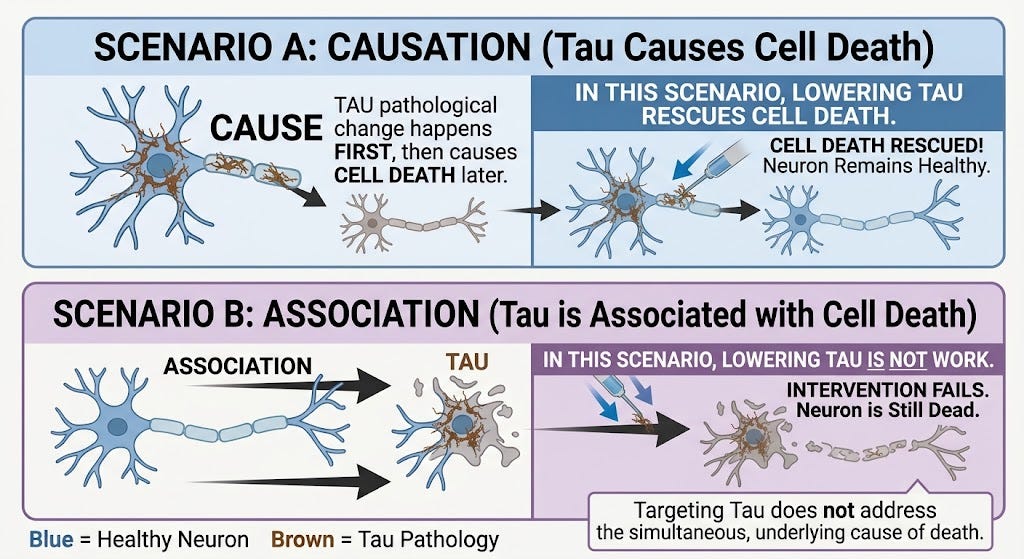
This uncertainty does not mean tau is unimportant. It means the therapeutic role of tau in AD remains unresolved.
Tau may be causal in some contexts, amplifying in others, and downstream in others. The task is to identify when tau is a driver, when it is a marker, and when lowering it meaningfully preserves brain function.
Take-Home Messages
1. Tau PET is a strong disease marker, but not yet a validated therapeutic surrogate.
Tau correlates with cognition better than amyloid, but this does not prove that lowering tau without understanding the mechanism of action will improve cognition.
2. Correlation is not causation.
Tau may drive neuronal injury, amplify other disease processes, or mark neurons already under stress. These possibilities require different treatments.
3. Alzheimer’s disease is not the same as a genetic tauopathy.
MAPT mutation diseases show that tau can cause neurodegeneration, but late-onset AD usually does not arise from MAPT mutations or tau overexpression.
4. Tau production, aggregation, and spread are different therapeutic targets.
Tau ASOs reduce tau production by targeting MAPT mRNA. OGA inhibitors try to change tau modification after tau has already been made.
5. Target engagement is not disease modification.
High OGA occupancy showed that ceperognastat reached and bound its target in the brain. It did not prove that synapses, neurons, or cognition would be protected.
6. OGA inhibition is not tau-specific.
OGA affects O-GlcNAcylation on many proteins involved in metabolism, signaling, stress responses, and synaptic function.
7. Synaptic function should be part of preclinical screening.
For Alzheimer’s drugs, moving a biomarker is not enough. A therapy should preserve or improve synaptic transmission, plasticity, and network function before advancing to large trials.
8. Tau ASOs remain important, but they still must prove clinical benefit.
They are a cleaner test of tau lowering than OGA inhibition, but the key endpoint remains cognition and function, not tau reduction alone.
9. Alzheimer’s disease likely requires systems-level thinking.
Amyloid and tau are important, but late-onset AD also involves endolysosomal, immune, vascular, metabolic, and synaptic biology.
10. The goal is not to treat the biomarker.
The goal is to preserve the living system the biomarker is supposed to represent: neurons, synapses, networks, and cognition.
References
Rabinovici GD, Grill JD. Ceperognastat in Alzheimer disease: lessons from a negative clinical trial. JAMA. 2026.
Kielbasa W, Goldsmith P, Donnelly KB, et al. Discovery and clinical translation of ceperognastat, an O-GlcNAcase inhibitor, for the treatment of Alzheimer’s disease. Alzheimer’s & Dementia: Translational Research & Clinical Interventions. 2024.
Fleisher AS, Munsie L, Mancini M, et al. Ceperognastat in early symptomatic Alzheimer disease: a randomized clinical trial. JAMA. 2026.
Hastings NB, Wang X, Song L, et al. Inhibition of O-GlcNAcase leads to elevation of O-GlcNAc tau and reduction of tauopathy and cerebrospinal fluid tau in rTg4510 mice. Molecular Neurodegeneration. 2017;12:39.
Graham DL, Gray AJ, Joyce JA, et al. Increased O-GlcNAcylation reduces pathological tau without affecting its normal phosphorylation in a mouse model of tauopathy. Neuropharmacology. 2014;79:307–313.
Pratt MR, Vocadlo DJ. Understanding and exploiting the roles of O-GlcNAc in neurodegenerative diseases. Journal of Biological Chemistry. 2023;299:105411.
Meade J, Mesa H, Alamgir S, Bieniecka I, Liu L, Zhang Q. Synaptic toxicity of OGA inhibitors and the failure of ceperognastat. The Journal of Prevention of Alzheimer’s Disease. 2026;13:100456.
Mummery CJ, Börjesson-Hanson A, Blackburn DJ, et al. Tau-targeting antisense oligonucleotide MAPTRx in mild Alzheimer’s disease: a phase 1b randomized, placebo-controlled trial. Nature Medicine. 2023;29:1437–1447.
Biogen. Phase 2 CELIA results for diranersen (BIIB080) in early Alzheimer’s disease. 2026.
Thank you for this review Dr Yassine. There is a lot of action on different binding sites on potential tau therapies and lots happening. Your point about systems based thinking is I think correct. The trouble is that with multiple pathological processes finding as you say meaningful biomarkers in a practical timeframe of study is difficult especially with a per single agent approach to trials. The per single agent approach is because a given company tests one agent at a time. Logically this difficulty with trying to fix a network problem with a single agent leads to wanting some kind of gene therapy ( and /or silver bullet old school thinking) much earlier in life combined with exercise/lifestyle/diet etc as this might target the root cause and thereby the later pathological cascade.
The wicked problem beyond that is the timeframe of assessing a particular gene therapy now in the currently affected adult carrier and finding the useful signal in the noise of a multicentric forest fire. Again finding that signal that tests gene therapy ( or any other significant therapy) so it can be rolled back into a treatment for non symptomatic earliest possible gene carriers often decades before onset is a complex social , ethical , and scientific and commercial problem. Cognitive outcome is critical but may take time to assess eg uniqure . Not to mention what other treatment is needed to help the millions of older adults alive today.
That is why I think often thoughtful and well educated people try to make what are effectively network problem bets using supplements / exercise etc and everything else and will combine those where they can with the progressive fruits of the current pharma/ science research project . And as these individuals are or may be generally well aware and can be clear headed about their risks and timeframe surely there is a place for researchers to better map these many thousands of individuals , offer best scientific evidence and apply big data AI based approaches to see what network problem benefits might be accruing or not? Predict-HD is a primitive example of what is now possible. I think it’s well time to embrace what often smart, thinking reading informed people are actually doing in a network problem and use it scientifically. Dr Nick Norwitz Stay Curious is a good example. Mapping all following such an approach with big data might lead to some interesting and accessible insights and trial cohorts . All the best and welcome your thoughts.