


Last week, I discussed a new study from our laboratory showing that higher APOE4 protein concentrations in cerebrospinal fluid (CSF) were associated with higher levels of tau, a protein associated with Alzheimer’s disease pathology. [1]
We also made an interesting observation in people carrying APOE3/4, who inherit one APOE3 gene and one APOE4 gene. Despite having one copy of each, they had more APOE4 than APOE3 protein in CSF. The relative abundance of APOE4 was higher among participants with mild cognitive impairment.
These findings raised a question:
Why might people carrying the same APOE4 genotype have different amounts of APOE4 protein?
And could those differences help explain why APOE4 increases Alzheimer’s risk more strongly in some people than in others?
A possible answer lies in the DNA surrounding APOE4, which has been shaped by thousands of years of human evolution and migration.
Why is APOE4 the oldest common form of APOE?
APOE4 is considered the ancestral form of the three common human APOE variants.
The APOE gene provides instructions for making apolipoprotein E, a protein involved in transporting cholesterol and other fats. In the brain, APOE also participates in maintaining neurons and responding to injury.
Humans commonly inherit three forms of APOE: APOE2, APOE3, and APOE4. These are called alleles, meaning different versions of the same gene. We inherit one APOE allele from each biological parent.
Evolutionary evidence suggests that an APOE4-like sequence existed before APOE3 emerged through a DNA change. APOE2 appeared later through another change.
Today, APOE3 is the most common version worldwide.
As human populations migrated from Africa into other parts of the world, they carried APOE4 with them. Over many generations, migration, population mixing, and evolutionary processes influenced how common APOE4 became in different regions.
As a result, APOE4 is found worldwide, but its frequency varies considerably across populations.
Does APOE4 carry the same Alzheimer’s risk everywhere?
Not necessarily.
Large population studies have found that APOE4 frequency varies across the world. But how common APOE4 is in a population does not necessarily tell us how strongly it increases Alzheimer’s risk.
A review by Belloy, Napolioni, and Greicius [2] illustrates this distinction.
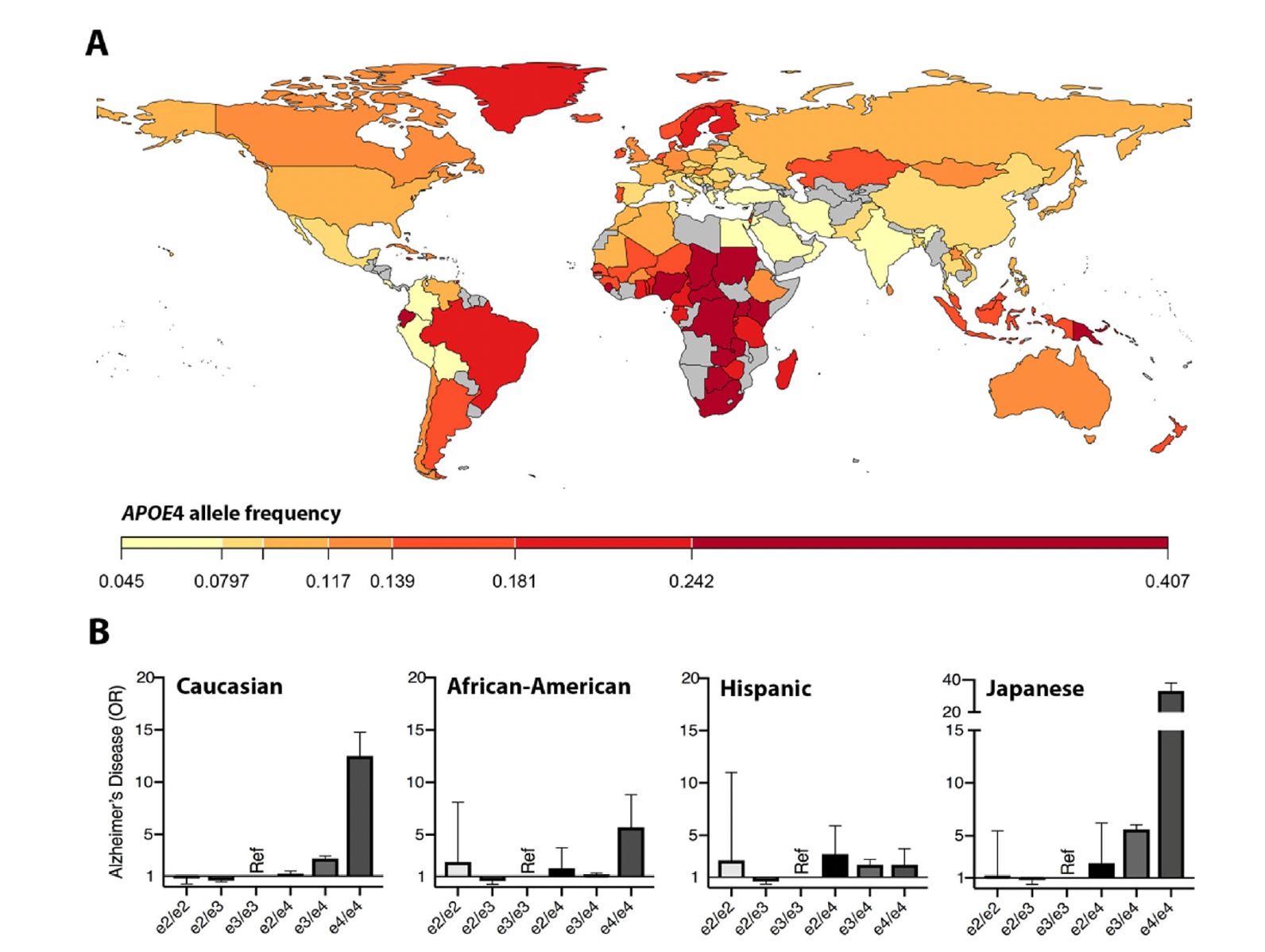
Figure 1. APOE4 frequency and Alzheimer’s disease risk across populations.
Panel A shows the geographic distribution of APOE4 allele frequency. Panel B shows the association between APOE genotype and Alzheimer’s disease in different population groups. The figure illustrates that APOE4 frequency and the strength of its association with Alzheimer’s disease are not the same measure. The population categories reflect those used in the original studies from [2].
One particularly interesting example comes from Nigeria.
In a longitudinal study, researchers followed 2,200 Yoruba adults in Nigeria and 1,871 African Americans for approximately nine years. [3]
APOE4 was associated with Alzheimer’s disease in both populations, but its association was weaker among Yoruba participants.
Among people with two copies of APOE4, the adjusted hazard ratio for Alzheimer’s disease was approximately 2.95 among Yoruba participants, compared with 4.12 among African Americans, each relative to noncarriers in the same population.
A hazard ratio compares how quickly an event occurs over time in two groups. It does not represent someone’s lifetime probability of developing Alzheimer’s disease.
The interesting observation was not that many Nigerian APOE4 carriers remained cognitively healthy. Most APOE4 carriers worldwide do not inevitably develop Alzheimer’s disease.
Rather, the important question was:
Why does APOE4 appear to have a different effect on Alzheimer’s risk in different populations?
Differences in environment, vascular health, and other factors may contribute. But researchers also began investigating whether the DNA inherited alongside APOE4 could modify its effects.
What is a haplotype, and why does it matter?
Most people are familiar with the three common APOE forms: APOE2, APOE3, and APOE4.
But these forms are determined by differences at just two positions in our DNA.
A variation at a single DNA position is called a single-nucleotide polymorphism, or SNP, pronounced snip.
Many other SNPs exist in the region surrounding APOE.
Nearby SNPs are often inherited together from parent to child. Scientists call a combination of DNA variants inherited together on the same chromosome a haplotype.

This means that two people can carry exactly the same APOE4 gene copy but have different DNA variants surrounding the gene.
Why is that important?
Because some DNA variants influence gene expression—how actively a gene is used to produce RNA, which is an important step toward making protein.
In other words, even if two people carry the same APOE4 gene version, nearby DNA differences may influence how much APOE4 their cells produce.
That is the central idea of this article.
What does our ancestry tell us about APOE4?
Throughout human history, populations have migrated and mixed. Geneticists call this mixing of ancestry from historically different populations admixture.
A person can inherit DNA from ancestors belonging to different populations, but that ancestry is not distributed uniformly across the genome.
Scientists therefore distinguish between two concepts.
Global ancestry describes ancestry estimated across a person’s entire genome.
Local ancestry describes the ancestral origin of one particular DNA segment.
For example, someone may have substantial African ancestry overall but inherit the chromosome segment containing APOE from a European ancestor.
Another person may inherit APOE4 on a chromosome segment of African ancestry.
Both carry APOE4, but their surrounding DNA may differ.
In a 2018 study, researchers examined African American and European local ancestry s and found that APOE4 inherited on an African local ancestry background was associated with lower Alzheimer’s risk than APOE4 inherited on a European local ancestry background-Figure 4. [4]
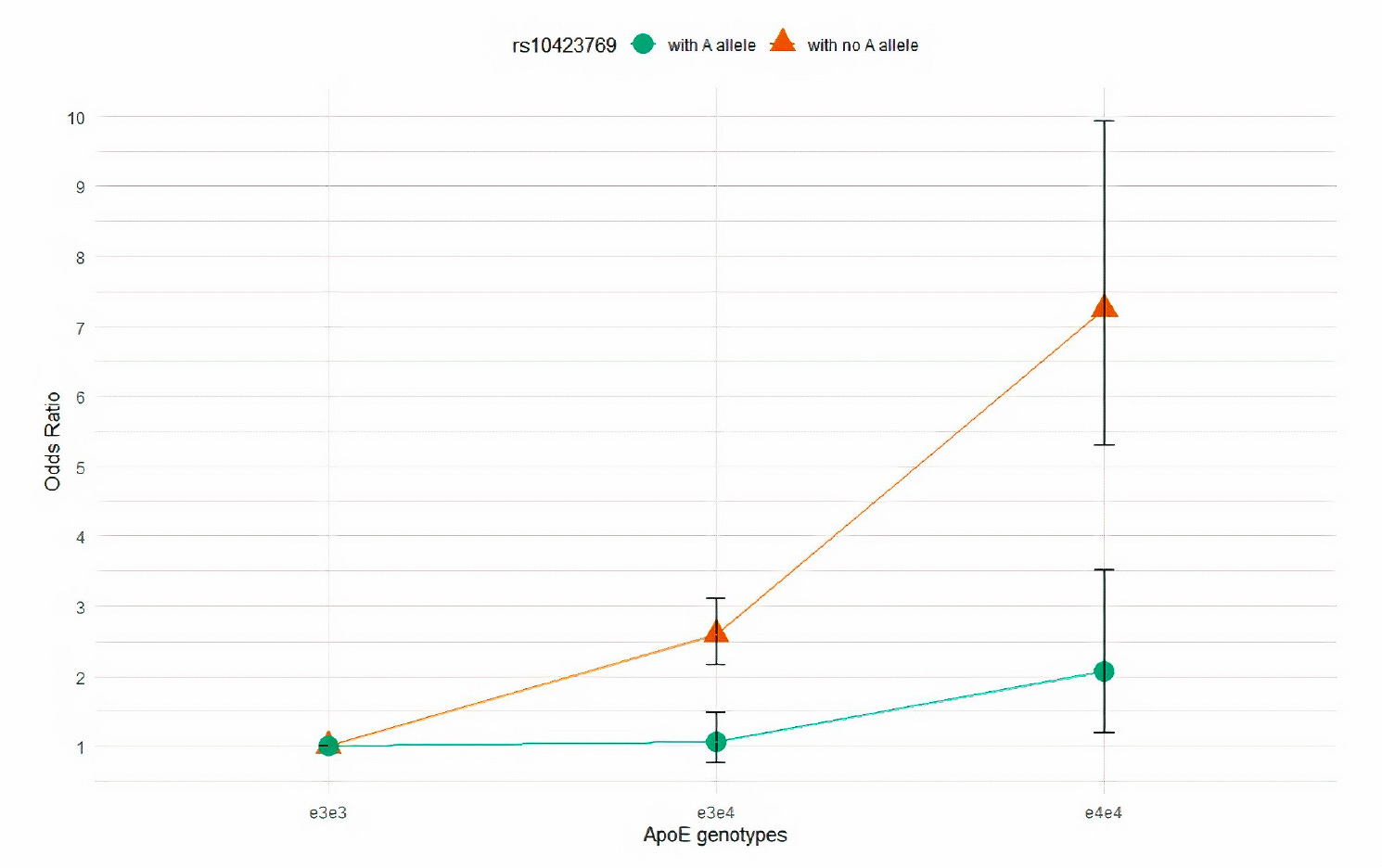
This suggested that the DNA surrounding APOE4 might contain variants that modify its effects.
A subsequent study identified a region near APOE associated with substantially reduced APOE4-related Alzheimer’s risk in African-ancestry populations. [5]
The specific protective mechanism remains uncertain, but the findings raised a compelling possibility:
Could some inherited APOE4 haplotypes influence how much APOE4 is produced in the brain?
Could the DNA surrounding APOE4 control its expression?
A 2021 study provided an important clue.
Researchers examined brain tissue from 11 people with APOE4/4 who differed in the ancestral origin of the DNA surrounding APOE. [6]
They used a technique called single-nucleus RNA sequencing, which measures gene expression in individual brain-cell nuclei.
They found higher APOE RNA expression in brains with European local ancestry around APOE than in those with African local ancestry.
This was particularly interesting because it connected two observations: APOE4-associated Alzheimer’s risk differs across some ancestral haplotypes, and APOE expression may also differ across those haplotypes.
Could higher APOE4 production contribute to greater Alzheimer’s risk?
It is a plausible hypothesis, but the study had important limitations. It included only 11 brain donors, all with Alzheimer’s disease, and measured RNA rather than APOE4 protein.
Nevertheless, it offered a biological direction for further research.
How could neighboring DNA regulate APOE expression?
To understand how this might happen, we need to look beyond the APOE gene itself.
APOE sits next to another gene called TOMM40.
Although TOMM40 produces a protein involved in mitochondrial function, the DNA sequences inside TOMM40 may also regulate nearby genes, including APOE.
In a large genetic study, my colleague Alex Kulminski and collaborators found that variants involving APOE, TOMM40, and another neighboring gene, APOC1, were associated with differences in Alzheimer’s risk. [7]
But how might these variants work?
Research relevant to the work of the lab of my colleague and friend Ornit Chiba-Falek helped explain the importance of APOE gene regulation.
In a 2022 study, they tested DNA sequences within TOMM40 that differed between African and European/Japanese APOE4 haplotypes. [8]
They found that certain sequences associated with European/Japanese haplotypes showed greater gene-regulating activity in laboratory models of astrocytes and microglia.
Astrocytes help support neurons and maintain the brain’s environment. Microglia are the brain’s resident immune cells.
The researchers also found evidence that some of these regulatory regions interact with the APOE gene’s control region.
These results suggest that DNA inherited alongside APOE4 may influence how actively the gene is expressed in brain cells.
This is a potential explanation for why APOE4 expression differs between individuals carrying the same protein variant and can unlock new therapeutic pathways.
However, these experiments do not yet prove that the regulatory differences cause Alzheimer’s disease or explain the risk differences between populations.
Would producing less APOE4 help protect the brain?
If higher APOE4 abundance contributes to Alzheimer’s pathology, reducing the amount of functional APOE4 might be beneficial.
Rare human mutations provide an intriguing clue.
In a 2024 study, researchers identified individuals with rare APOE loss-of-function mutations, which disrupt the production or activity of functional APOE protein. [9]
Two individuals carrying APOE3/4 had mutations that disrupted their APOE4 copy. Both remained cognitively healthy into older age, with reassuring Alzheimer’s pathology or biomarker findings.
These observations suggest that reducing functional APOE4 may be compatible with healthy cognitive aging.
Other rare genetic variants can alter the APOE4 protein itself and may also influence risk, suggesting that both protein abundance and protein function matter.
But these protective mutations are exceptionally rare. They do not establish that reducing APOE4 will prevent Alzheimer’s disease. And the APOE gene has biological advantages that are not confined to matters of the aging brain.
They do, however, strengthen the rationale for investigating APOE4 reduction as a possible therapeutic strategy later in life.
What remains uncertain?
Several limitations are important.
First, association does not establish causation. Higher APOE expression in a particular ancestral haplotype does not prove that increased expression causes higher Alzheimer’s risk.
Second, RNA expression is not the same as protein concentration. The brain’s APOE4 protein levels depend on how much protein is produced, how it is processed, and how quickly it is cleared.
Third, genetic background is complex. The microglia experiments show that donor background matters, but they do not isolate the contribution of DNA immediately surrounding APOE from other inherited variants.
Fourth, population studies are not entirely consistent. Some studies suggest substantial differences in APOE4-associated Alzheimer’s risk across populations, while a large 2025 study of approximately 85,000 participants found broadly comparable associations with recorded dementia diagnoses across several demographic groups. [10] The studies differed in how dementia was defined and did not always examine local ancestry.
Finally, genetic ancestry is not the same as race or ethnicity. Alzheimer’s risk is influenced by age, vascular health, environmental exposures, and many other factors.
The next step is to study larger and more diverse groups while measuring APOE haplotypes, APOE4 protein concentrations, and Alzheimer’s biomarkers in the same individuals.
That would help determine whether inherited differences in APOE expression contribute meaningfully to Alzheimer’s risk.
Take-home messages
The same APOE4 genotype can be associated with different Alzheimer’s risks. Other inherited genetic factors and environmental exposures influence its effects.
DNA surrounding APOE4 may influence how much APOE4 brain cells produce. This provides a possible connection between genetic ancestry and Alzheimer’s risk.
Local ancestry helps identify genetic differences that conventional APOE testing misses. The same APOE4 protein can be inherited on different haplotypes.
Human brain studies suggest that APOE expression differs across ancestral backgrounds, but larger studies are needed to determine whether those differences explain Alzheimer’s risk.
Understanding naturally occurring resilience may reveal new therapeutic targets, including ways to reduce harmful APOE4 expression or activity.
Returning to our original question
Last week, our study suggested that higher APOE4 protein concentrations in CSF are associated with greater tau pathology.
The genetic studies discussed here raise a possible explanation for why APOE4 abundance differs among individuals.
The DNA surrounding APOE4 may influence how much of the protein is produced in the brain.
This is not the only mechanism influencing APOE4-related Alzheimer’s risk, and it remains a hypothesis that requires further testing.
But it suggests an important direction for research.
If we can identify the inherited DNA changes that naturally limit harmful APOE4 expression, we may discover ways to reduce Alzheimer’s risk that benefit people across all ancestral backgrounds.
References
Tsokolas ZE, et al. Beyond lipidation: CSF APOE4 protein burden, not HDL subclass, drives tau associations in APOE4 Alzheimer’s disease. Alzheimer’s Research & Therapy. 2026. https://doi.org/10.1186/s13195-026-02191-5
Belloy ME, Napolioni V, Greicius MD. A quarter century of APOE and Alzheimer’s disease: Progress to date and the path forward. Neuron. 2019. https://doi.org/10.1016/j.neuron.2019.01.056
Hendrie HC, et al. APOE ε4 and the risk for Alzheimer disease and cognitive decline in African Americans and Yoruba. International Psychogeriatrics. 2014. https://doi.org/10.1017/S1041610214000167
Rajabli F, et al. Ancestral origin of ApoE ε4 Alzheimer disease risk in Puerto Rican and African American populations. PLoS Genetics. 2018. https://doi.org/10.1371/journal.pgen.1007791
Rajabli F, et al. A locus at 19q13.31 significantly reduces the APOE ε4 risk for Alzheimer’s disease in African ancestry. PLoS Genetics. 2022. https://doi.org/10.1371/journal.pgen.1009977
Griswold AJ, et al. Increased APOE ε4 expression is associated with the difference in Alzheimer’s disease risk from diverse ancestral backgrounds. Alzheimer’s & Dementia. 2021. https://doi.org/10.1002/alz.12287
Kulminski AM, et al. TOMM40 and APOC1 variants differentiate the impacts of the APOE ε4 allele on Alzheimer’s disease risk across sexes, ages, and ancestries. Alzheimer’s & Dementia: Diagnosis, Assessment & Disease Monitoring. 2024. https://doi.org/10.1002/dad2.12600
Nuytemans K, et al. Identifying differential regulatory control of APOE ε4 on African versus European haplotypes as potential therapeutic targets. Alzheimer’s & Dementia. 2022. https://doi.org/10.1002/alz.12534
Chemparathy A, et al. APOE loss-of-function variants: Compatible with longevity and associated with resistance to Alzheimer’s disease pathology. Neuron. 2024. https://doi.org/10.1016/j.neuron.2024.01.008
Ghisays V, et al. Impact of APOE4-related dementia risk in underrepresented groups from the All of Us research program. Alzheimer’s & Dementia. 2025. https://doi.org/10.1002/alz.70245
Disclosure: This post contains partially AI-assisted text. All references were reviewed for accuracy. I have no relevant conflicts of interest. These opinions are mine and do not reflect the opinions of my employer. The goals of these posts are educational and do not substitute for medical advice.