


A 43-year-old woman came to see me because her mother had developed dementia at age 72.
She had undergone genetic testing and learned that she carries one copy of APOE4, the most common genetic risk factor for late-onset Alzheimer’s disease. She wanted to be proactive about prevention.
Her primary care physician had started her on what she called a low-dose “GLP3” drug to lower inflammation and reduce her future risk of dementia.
But her metabolic profile was already favorable. Her BMI was below 25. Her hemoglobin A1c was 4.6%. Her high-sensitivity C-reactive protein, or hsCRP, was undetectable. She did not have diabetes, obesity, or an obvious metabolic abnormality.
Her question was simple:
Is this actually good for my brain?
GLP-1–based drugs have substantial benefits when they treat a biological problem that is present. In obesity, diabetes, insulin resistance, and cardiovascular disease, there is a measurable target.
But what happens when the target is missing?
For a lean, normoglycemic APOE4 carrier, we have no evidence that GLP-1 therapy prevents dementia. At the same time, these drugs suppress appetite and energy intake, cause gastrointestinal side effects, and can reduce both lean mass and fat.
That changes the risk-benefit calculation.
First: What Drug Are We Talking About?
There is no standard medication class called “GLP3.”
Patients may mean a GLP-1 receptor agonist such as semaglutide, a dual GIP/GLP-1 agonist such as tirzepatide, or one of the newer multi-receptor agonists.
The exact molecule, dose, formulation, and source matter, especially with compounded products. But even with an FDA-approved product, the more important question is the indication.
What Problem Are We Treating?
The major GLP-1 trials were conducted in people with identifiable metabolic or cardiovascular risk.
The SELECT trial enrolled 17,604 adults age 45 or older with BMI ≥27 and established cardiovascular disease, but without diabetes. Semaglutide reduced major cardiovascular events in this high-risk population. [1]
STEP 1 enrolled adults with BMI ≥30, or BMI ≥27 with at least one weight-related condition, and demonstrated substantial weight loss with semaglutide. [2]
These are important results, but neither trial studied healthy, normal-weight adults taking GLP-1 therapy for longevity or dementia prevention.
The evidence supports a narrower conclusion:
GLP-1 drugs improve important outcomes when there is metabolic or cardiovascular pathology to treat.
They should not automatically be extrapolated into longevity drugs for metabolically healthy people.
Inflammation Is Not One Biological Process
The argument that GLP-1 drugs might prevent dementia because they “lower inflammation” needs more precision.
Inflammation is not a single biological state. Acute immune responses, autoimmune inflammation, infection-related inflammation, neuroinflammation, and the chronic low-grade inflammation associated with obesity and insulin resistance involve overlapping but distinct pathways.
The inflammatory state most closely linked to the metabolic effects of GLP-1 therapy is metabolic inflammation, sometimes called metaflammation: chronic, low-grade immune activation associated with excess adiposity, insulin resistance, type 2 diabetes, and metabolic syndrome.
In that setting, dysfunctional adipose tissue, altered adipokine signaling, and immune-cell activation contribute to insulin resistance and cardiometabolic disease. Reducing excess adiposity and improving insulin sensitivity can therefore reduce a real inflammatory burden. [10]
But that is different from assuming that any reduction in systemic inflammation is beneficial to the brain.
Neuroinflammation in Alzheimer’s disease is not synonymous with metabolic inflammation, and circulating CRP is not a direct measure of inflammatory activity in the brain.
That distinction is especially relevant in someone who is lean, normoglycemic, and has undetectable hsCRP.
EVOKE Helps Separate Systemic Inflammation From Brain Benefit
The EVOKE and EVOKE+ trials are informative because participants were selected for early symptomatic Alzheimer’s disease—not for obesity, diabetes, insulin resistance, or cardiovascular disease.
Participants were 55 to 85 years old with mild cognitive impairment or mild dementia due to Alzheimer’s disease, objective cognitive impairment, and confirmed amyloid pathology. Mean BMI was about 25.7 kg/m², nearly half had a normal BMI, and only a minority had obesity or type 2 diabetes. [3]
This was very different from the populations in SELECT and STEP 1.
EVOKE and EVOKE+ randomized 3,808 participants to oral semaglutide or placebo. Semaglutide did not slow decline on the primary clinical endpoint, the Clinical Dementia Rating–Sum of Boxes. Figure 1 [3]
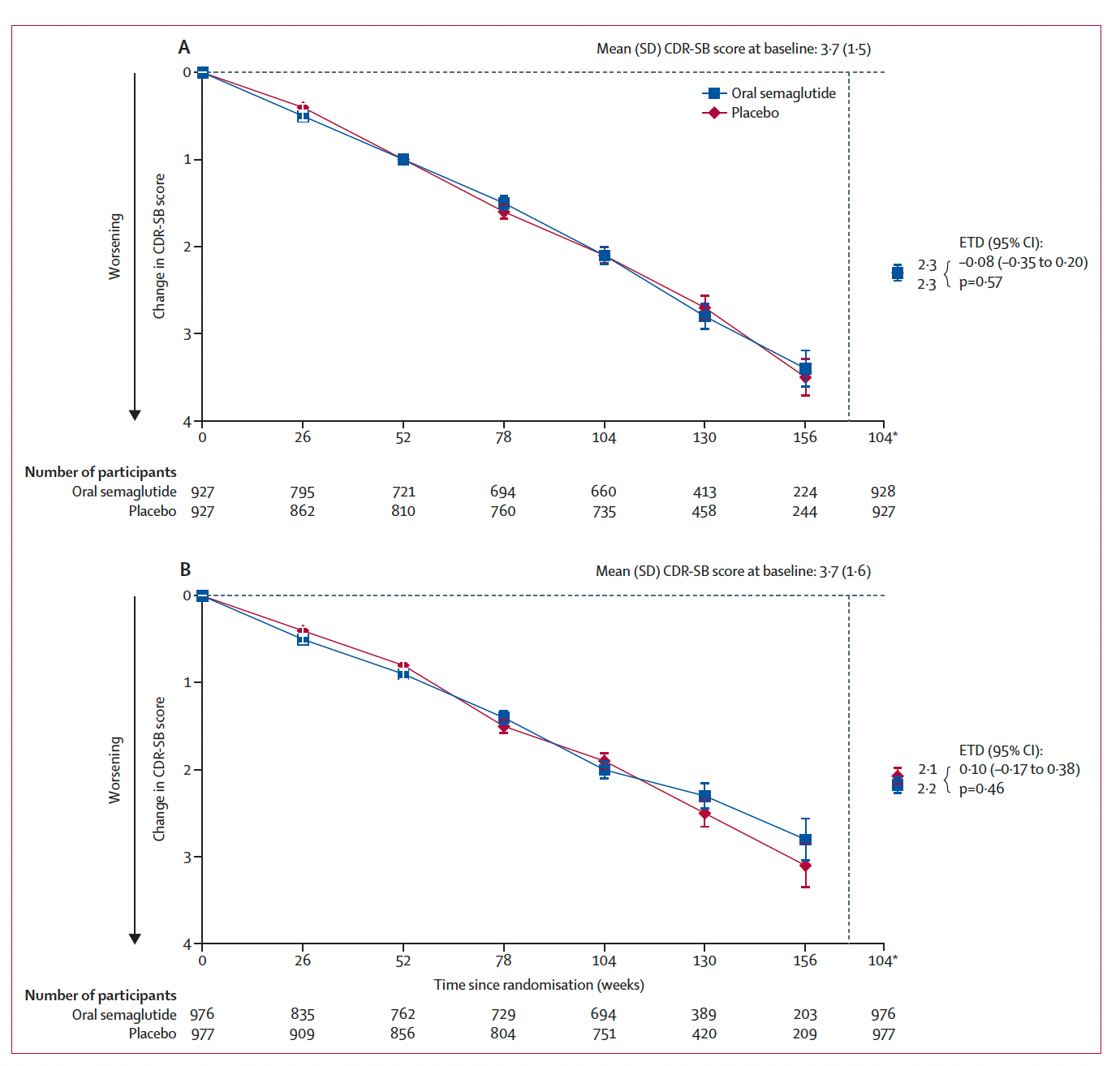
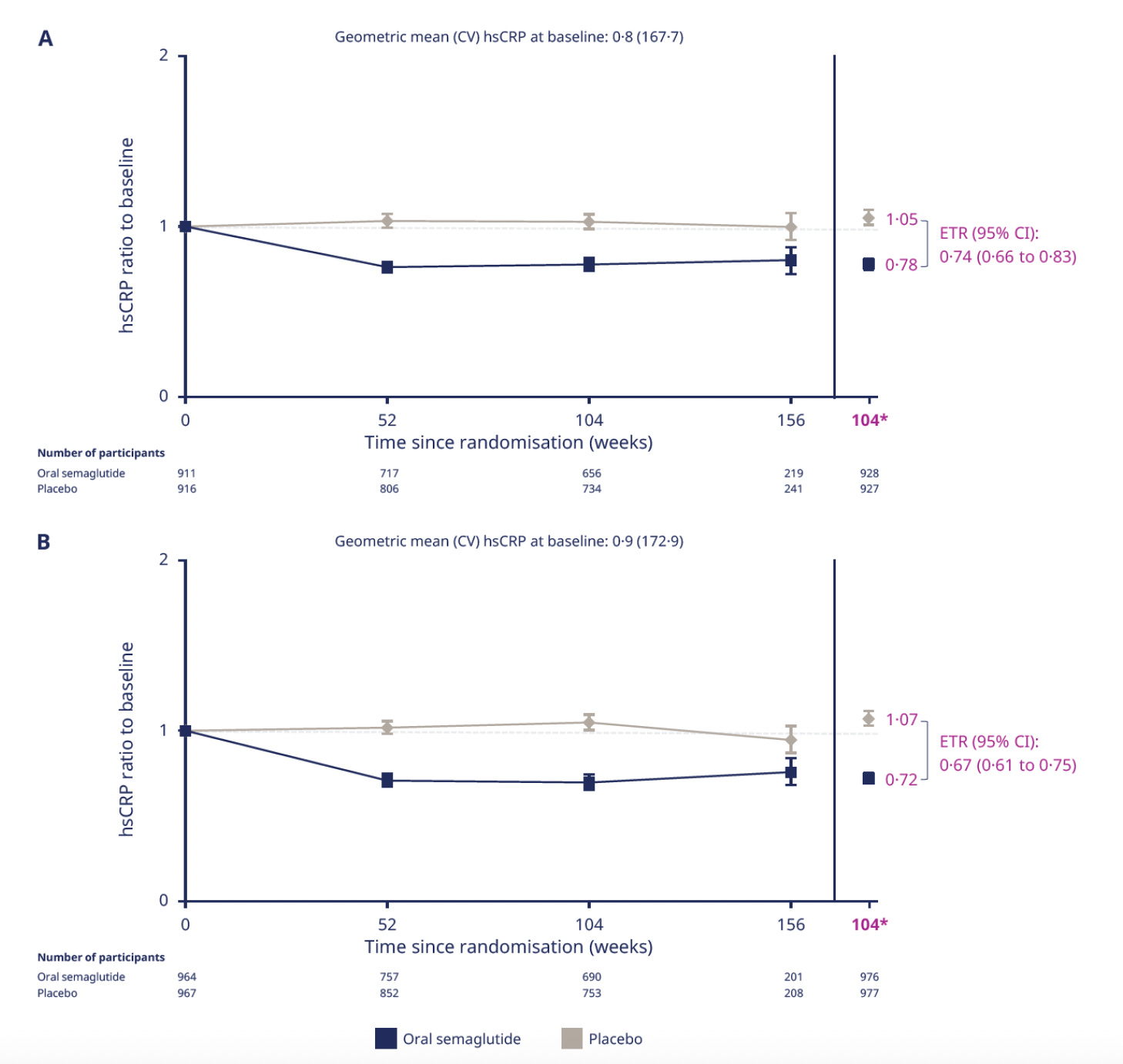
Yet semaglutide lowered hsCRP, Figure 2.
That combination is important:
Systemic inflammation decreased, but clinical Alzheimer’s progression did not.
This does not mean inflammation is unimportant in Alzheimer’s disease. Nor does it exclude the possibility that treating obesity, insulin resistance, diabetes, or vascular disease earlier in life could indirectly reduce dementia risk.
But it shows that lowering a systemic inflammatory marker with a GLP-1 receptor agonist, in a population not selected for major metabolic disease, was not sufficient to produce cognitive benefit.
For a lean patient whose hsCRP is already undetectable, lowering CRP further has no demonstrated meaning for brain protection yet.
But the more relevant question is:
What inflammatory process is present, and is that process actually being treated?
The Lean-Mass Problem
For a lean APOE4 carrier, the concern is not simply weight loss. It is catabolism.
GLP-1 drugs reduce appetite and energy intake. In a person with obesity, that can be beneficial because much of the lost weight is excess fat. But the weight lost is not entirely fat.
In the STEP 1 body-composition substudy, semaglutide was associated with reductions in both fat and lean mass. DXA-measured lean mass is not identical to skeletal muscle—it also includes water, organs, connective tissue, and glycogen-associated water—but the finding remains relevant when there is little excess weight to lose.
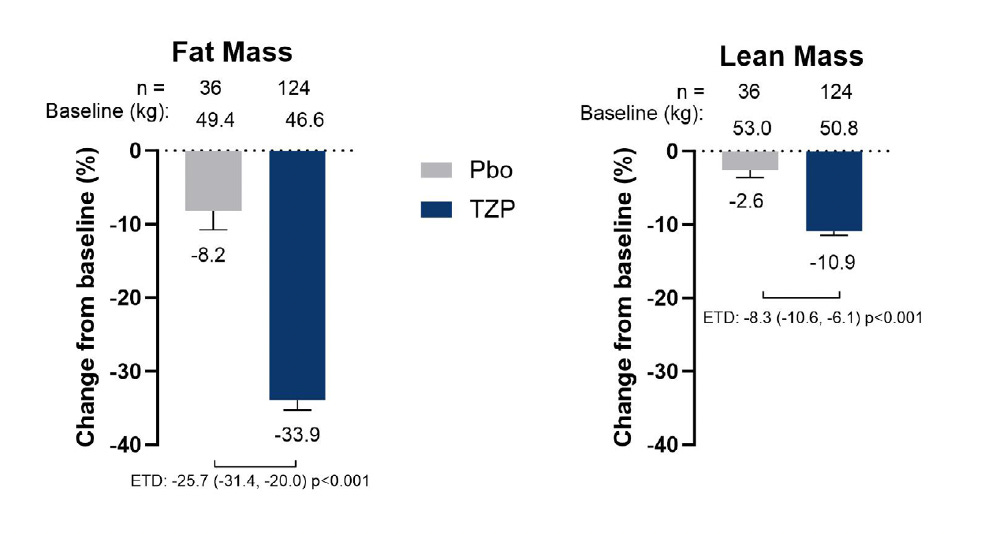
In the SURMOUNT-1 DXA substudy, approximately 75% of weight lost with tirzepatide was fat mass and about 25% was lean mass, Figure 3. [4]
For someone with obesity, the net change may still be favorable.
For someone who is already lean, there is less excess adipose tissue to remove and less margin for avoidable loss of lean tissue.
Regaining Lost Muscle May Be More Difficult With Aging
A loss of lean mass with aging is problematic. A 2025 study by Jiang and colleagues provides important insights on why it is difficult to regain lean mass as we age. The investigators used UM-HET3 mice, the genetically heterogeneous strain used extensively in the NIA Interventions Testing Program. Importantly, these mice were first made obese and metabolically unhealthy with a high-fat diet. [5]
Continuous liraglutide improved weight and metabolic health. Again, the drug was acting in a system with clear metabolic pathology to correct.
Repeated treatment and withdrawal produced a different pattern. Fat mass returned more readily than lean mass, while visceral adiposity and hyperleptinemia increased and some metabolic benefits disappeared.
This was not a lifespan or cognition experiment, and mouse findings should not be assumed to occur in humans. But it illustrates an important concept:
Weight regain after stopping GLP1s is not necessarily muscle recovery.
That may matter more with aging, when skeletal muscle is already harder to rebuild because of anabolic resistance and progressive loss of muscle mass and strength.
Returning to the same number on the scale may not mean returning to the same body composition.
Why APOE4 and Catabolism Matter
APOE4 affects lipid transport, glucose metabolism, inflammation, and brain energy metabolism. This makes weight loss more complicated than simply reducing fat mass.
Adipose tissue and skeletal muscle are also endocrine organs. They release adipokines and myokines that participate in signaling between peripheral tissues and the brain and can influence metabolism, vascular function, inflammation, and neuronal health.
When obesity, insulin resistance, diabetes, or metabolic syndrome are present, reducing dysfunctional adipose tissue may improve metabolic inflammation and vascular risk enough to outweigh some loss of lean mass.
But the balance may be different in a lean APOE4 carrier. Loss of adipose tissue and muscle can also reduce metabolic reserve and alter adipokine and myokine signaling.
In our review of APOE alleles and diet, Caleb Finch and I discussed evidence that APOE4 alters brain energy metabolism and that the cognitive consequences of weight loss may differ by genotype. We highlighted Look AHEAD, where favorable cognitive effects of intensive weight loss were seen primarily in APOE4 non-carriers. [6]
These findings do not prove that GLP-1–induced weight loss harms APOE4 carriers. They suggest a more nuanced principle:
When metabolic disease is present, correcting it may provide substantial brain benefit. When metabolic health is already favorable, loss of muscle, adipose-derived signals, and metabolic reserve may carry greater importance.
Side Effects Matter
The most common adverse effects of GLP-1–based therapies are gastrointestinal.
Jalleh and colleagues reviewed nausea, vomiting, diarrhea, constipation, delayed gastric emptying, and related gastrointestinal effects of GLP-1 receptor agonists in The Lancet Gastroenterology & Hepatology. [7]
A large systematic review and meta-analysis of randomized trials also found increased risks of cholelithiasis and probably gastroesophageal reflux disease. [8]
For a patient with obesity, diabetes, or substantial cardiovascular risk, these adverse effects may be an acceptable tradeoff for demonstrated benefit.
For a healthy lean person, the calculation is different.
Reduced appetite may also reduce total energy, protein, and micronutrient intake. In someone with little excess weight to lose, that reinforces the concern about catabolism and preservation of lean tissue.
Does “Microdosing” Solve the Problem?
An increasingly common proposal is to use a very small dose of a GLP-1 drug—often called microdosing—with the hope of obtaining metabolic or anti-inflammatory effects while avoiding substantial weight loss or side effects.
The problem is that this strategy has not been validated for dementia prevention.
Komé, Chandran, Buse, Klein and colleagues discussed fractional semaglutide dosing in Diabetes Care in 2025, largely in the context of individualized diabetes care, tolerability, and cost. It was not evidence that microdosed semaglutide prevents Alzheimer’s disease or extends lifespan. [9]
The major clinical benefits of GLP-1 drugs were demonstrated at specific studied doses in defined disease populations.
Lower doses may reduce adverse effects, but they may also reduce efficacy. A patient may still experience early satiety, nausea, constipation, reflux, or reduced food intake at a dose that has never been shown to reproduce the clinical benefits demonstrated in outcome trials.
So microdosing introduces a different uncertainty:
A person may receive enough drug to alter normal physiology without receiving a dose that has demonstrated clinical benefit.
When GLP-1 Therapy Is Indicated, Protect Muscle
None of this argues against GLP-1 therapy when there is an appropriate indication.
If a patient has obesity, diabetes, insulin resistance, cardiovascular disease, or another established indication, the potential benefits may substantially outweigh the risks.
But muscle preservation deserves particular attention whenever these drugs are used in older adults or anyone vulnerable to age-related muscle loss.
Aging itself is associated with progressive loss of muscle mass and strength and reduced anabolic responsiveness. Adding pharmacologic weight loss to that process makes muscle an important treatment outcome.
Resistance training should be incorporated into the therapeutic plan, together with adequate protein and total energy intake. In older adults, monitoring weight alone is insufficient. Strength, functional performance, dietary intake, and, where appropriate, body composition should also be followed. [11]
The pharmaceutical pipeline is moving in the same direction. Investigational drugs targeting myostatin and activin signaling are being combined with GLP-1–based therapies to preserve lean mass while maintaining fat loss. Bimagrumab has been studied with semaglutide, and apitegromab with tirzepatide, with early trials showing improved preservation of lean tissue. [12,13]
These approaches remain experimental, but they reinforce an important shift:
The goal should not simply be maximum weight loss. It should be loss of excess fat while preserving functional muscle.
What We Still Do Not Know
The uncertainty cuts in both directions.
EVOKE and EVOKE+ studied people with symptomatic Alzheimer’s disease. They cannot tell us whether treatment decades earlier might alter dementia risk.
APOE4 carriers who also have obesity, diabetes, insulin resistance, metabolic syndrome, or substantial vascular disease may benefit when those conditions are effectively treated.
Conversely, we do not have randomized trials showing that GLP-1 therapy causes cognitive harm in lean APOE4 carriers.
The concern about catabolism is therefore biologically plausible, not clinically proven.
A definitive prevention trial would require metabolically healthy participants, APOE genotyping, careful measurement of muscle and body composition, nutritional status, inflammatory phenotype, drug exposure, and long-term cognitive outcomes.
That study is not likely to be done, given the complexity of long-term cognitive outcome trials.
For preventive pharmacology in someone who is currently healthy, absence of demonstrated harm should not be mistaken for evidence of benefit.
What I Would Tell This Patient
I would tell her that GLP-1 drugs are effective medications when there is a clear metabolic or vascular indication.
But we currently do not have evidence that either standard-dose or microdose GLP-1 therapy prevents dementia in a lean, normoglycemic APOE4 carrier with undetectable hsCRP and no clear evidence of metabolic or vascular inflammation.
I would return to one question:
What abnormality are we treating?
If the answer is obesity, diabetes, insulin resistance, metabolic syndrome, cardiovascular disease, fatty liver disease, or another established indication, there is a biological target and an evidence base. Treat it—and, particularly with aging, actively protect muscle.
If the answer is simply APOE4 carrier status and dementia prevention, the evidence is not there.
For APOE4 carriers seeking prevention, we already have measurable targets: blood pressure, apoB and LDL cholesterol, glycemic health, fitness, muscle strength, sleep apnea, smoking, diet quality, hearing, and other vascular and metabolic risk factors.
The goal should be to identify abnormalities and correct them—not assume that altering normal metabolism is beneficial simply because the same drug helps people with metabolic disease.
Take-Home Messages
GLP-1 drugs have proven benefits when there is metabolic or cardiovascular disease to treat.
They are not proven longevity or dementia-prevention drugs in healthy, lean adults.
Inflammation is heterogeneous. Metabolic inflammation associated with obesity, insulin resistance, diabetes, and metabolic syndrome is not the same as neuroinflammation.
In EVOKE/EVOKE+, semaglutide lowered systemic inflammation in an Alzheimer’s population not selected for obesity or diabetes, yet did not slow cognitive decline.
GLP-1–associated weight loss includes lean-mass loss, which matters increasingly with aging.
In APOE4 carriers, treat harmful metabolic disease when it is present, but do not assume that loss of muscle, adipose tissue, and metabolic reserve is inherently brain-protective when metabolic health is already favorable.
Withdrawal deserves attention because fat may return more readily than lean tissue.
Microdosing has not been validated for dementia prevention and may produce pharmacologic effects without proven clinical benefit.
When GLP-1 therapy is indicated, particularly during aging, resistance training, adequate nutrition, and monitoring of muscle and function should be part of treatment.
The central clinical question remains: What biological abnormality are we treating?
References
Lincoff AM, Brown-Frandsen K, Colhoun HM, et al. Semaglutide and cardiovascular outcomes in obesity without diabetes. New England Journal of Medicine. 2023.
Wilding JPH, et al. Once-weekly semaglutide in adults with overweight or obesity. New England Journal of Medicine. 2021.
Johannsen P, Cummings J, et al. Efficacy and safety of oral semaglutide in early-stage symptomatic Alzheimer’s disease: EVOKE and EVOKE+. Lancet. 2026.
Look M, Dunn JP, Kushner RF, et al. Body composition changes during weight reduction with tirzepatide in the SURMOUNT-1 study of adults with obesity or overweight. Diabetes, Obesity and Metabolism. 2025;27(5):2720-2729. doi:10.1111/dom.16275.
Jiang N, Yin J, Lawrence N, et al. Repeated withdrawal of a GLP-1 receptor agonist induces hyperleptinemia and deteriorates metabolic health in obese aging UM-HET3 mice. Aging Cell. 2025.
Yassine HN, Finch CE. APOE alleles and diet in brain aging and Alzheimer’s disease. Frontiers in Aging Neuroscience. 2020;12:150.
Jalleh RJ, Rayner CK, Hausken T, Jones KL, Camilleri M, Horowitz M. Gastrointestinal effects of GLP-1 receptor agonists: mechanisms, management, and future directions. Lancet Gastroenterology & Hepatology. 2024;9:957–964.
Chiang C-H, et al. Glucagon-like peptide-1 receptor agonists and gastrointestinal adverse events: a systematic review and meta-analysis. Gastroenterology. 2025.
Komé AM, Chandran MM, Tungate Lopez SS, Buse JB, Klein KR. One size does not fit all: understanding microdosing semaglutide for diabetes in multidose pens. Diabetes Care. 2025;48:e25–e27.
Tilg H, Ianiro G, Gasbarrini A, et al. Adipokines: masterminds of metabolic inflammation. Nature Reviews Immunology. 2025.
McKendry J, Coletta G, Nunes EA, Lim C, Phillips SM. Mitigating disuse-induced skeletal muscle atrophy in ageing: resistance exercise as a critical countermeasure. Experimental Physiology. 2024.
Heymsfield SB, Aronne LJ, Montgomery P, et al. Bimagrumab plus semaglutide alone or in combination for the treatment of obesity: a randomized phase 2 trial. Nature Medicine. 2026.
Pratley RE, Denham DS, Trivedi R, et al. Apitegromab for lean mass preservation during tirzepatide-induced weight loss: a randomized, double-blind, placebo-controlled phase 2 trial. Nature Medicine. 2026.
Disclosure: This post contains partially AI-assisted text. All references were reviewed for accuracy.
I am APOE3/4 and a 55 year old woman. I started taking 2.5 mg Tirzepatide every 1.5-2 weeks 18 months ago. I was metabolically healthy before I started, and am a bit leaner now. I have found that my knees have less pain when I run now than they did before I started, whether because of Tirzepatide or because of the weight loss (about 14 pounds), I do not know. But I do know that I have been able to push my more intensive cardio workouts further as a result, which I should think contributes to brain health.
I also have a single APOE4 allele. I am lean and fit with no metabolic or other heath problems. I microdosed Tirzepatide for a year at the rate of .6 mg per week as an uncontrolled n = 1 experiment. I wanted to see if this protocol would change any of my blood biomarkers. It did not. At such a low dose, it had, as far as I could tell, no effect whatsoever on me. I didn’t lose weight and didn’t lose lean mass. I got tired of the weekly injection so recently stopped taking it. All that said, my understanding is that, in the observational data on people with a metabolic disease who take GLP-1 drugs, the rates of other diseases such as dementia seem to decrease more than can be accounted for by weight loss alone. I am, of course, externally skeptical of extrapolations from observational studies - they rarely survive the rigors of a randomized controlled trial - but I think that this is the bet that metabolically healthy people who microdose GLP-1s are taking: that the drug may reduce the incidence of diseases like heart disease and dementia by mechanisms other than weight loss, and that these mechanisms may also work at low doses in metabolically healthy people.