


A 61-year-old woman recently came to see me with a question about creatine.
She carried two copies of APOE4, a genetic variant associated with a substantially increased risk of Alzheimer’s disease. Concerned about protecting her memory, she had started taking creatine every day after reading that it improves brain energy metabolism and might prevent cognitive decline.
“Should I keep taking it?” she asked.
Creatine, once associated mainly with athletes, is increasingly promoted for brain health, muscle preservation, and longevity.
But the evidence tells two different stories.
Creatine can modestly improve muscle strength when combined with resistance training. Its ability to prevent Alzheimer’s disease has not been demonstrated.
How does creatine work?
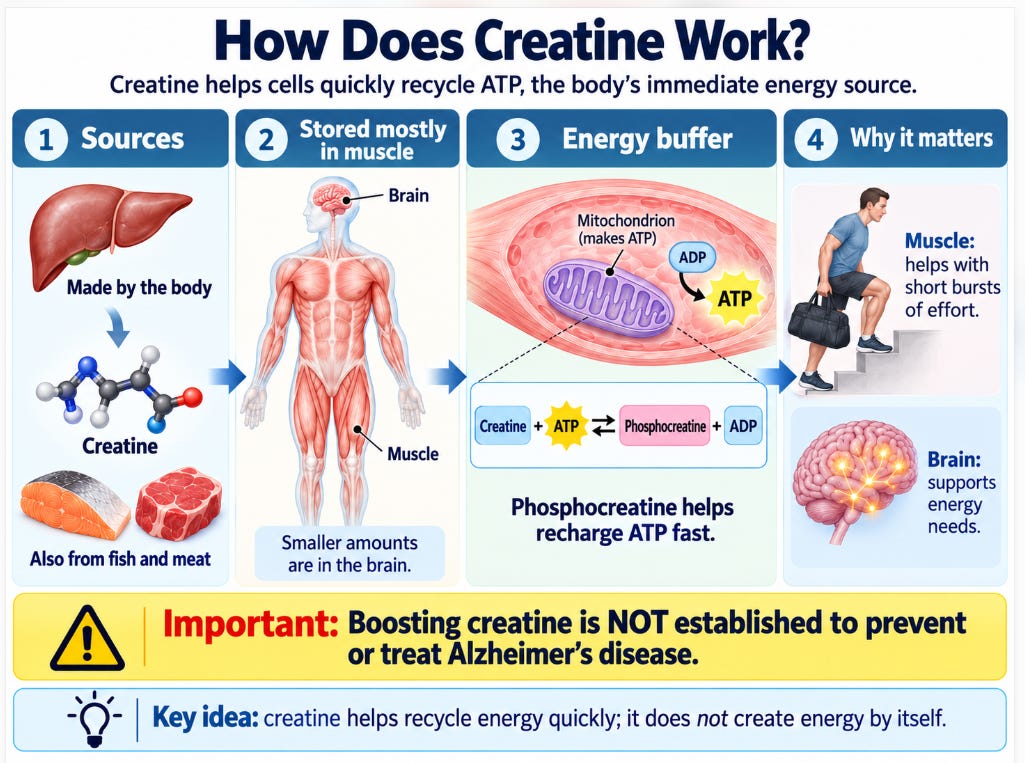
Creatine is a compound our bodies make naturally and obtain primarily from meat and fish. About 95% is stored in skeletal muscle, with smaller amounts in the brain and other organs. [1]
Its main function is to help cells rapidly regenerate ATP (adenosine triphosphate), the molecule they use for immediate energy.
Mitochondria produce much of our ATP from nutrients. But energy demand can rise faster than mitochondria can respond.
Imagine lifting a heavy suitcase or catching yourself during a stumble. Your muscles suddenly need more energy.
An enzyme called creatine kinase transfers a phosphate group between ATP and creatine, forming phosphocreatine. When energy demand rises, the reaction reverses, rapidly regenerating ATP.
Creatine + ATP ⇌ Phosphocreatine + ADP
Think of phosphocreatine as a rechargeable energy reserve.
The brain uses this system as well. Neurons require considerable energy to maintain electrical activity and communicate with one another.
However, creatine transport across the blood–brain barrier is limited, and the brain regulates its own creatine supply. Increasing muscle creatine through supplementation does not guarantee a comparable increase in the brain.
More importantly, even increasing brain creatine does not establish that memory improves or Alzheimer’s disease is prevented.
What does the evidence say about brain health?
Some small randomized trials have suggested that creatine may improve certain cognitive abilities.
A 2024 meta-analysis combined 16 randomized trials involving 492 participants. It reported improvements in selected measures of memory, attention time, and processing speed, but not overall cognition or executive function—the abilities involved in planning and complex decision-making. [2]
These findings sound promising. But how reliable are they?
A meta-analysis is only as trustworthy as the studies it combines and the methods used to analyze them.
Combining many small trials can increase statistical precision, but it cannot repair weaknesses in trial design, inconsistent testing, or inappropriate statistical methods.
In 2024, the European Food Safety Authority (EFSA) independently evaluated the evidence supporting a claim that creatine improves cognition.
Its scientific panel identified inconsistent findings and methodological concerns, including analyses that treated several related cognitive tests from the same participants as independent observations. That approach can exaggerate the apparent precision of a result.
EFSA concluded that a cause-and-effect relationship between creatine supplementation and improved cognitive function had not been established. [3]
This does not rule out benefits under particular circumstances, such as sleep deprivation. But improving performance on a brief cognitive test is very different from preventing dementia over decades.
What about neurodegenerative diseases?
Two landmark randomized trials provide an important caution.
The NET-PD LS-1 trial enrolled 1,741 people with early Parkinson’s disease, assigning them to 10 grams of creatine daily or placebo.

In the large NET-PD LS-1 (table above), five important outcomes were assessed: the ability to perform everyday activities, movement difficulties, overall Parkinson’s symptoms, thinking and memory, and quality of life.
Creatine did not provide a statistically significant benefit in any of these areas. Participants taking creatine experienced similar deterioration to those receiving placebo, and the trial was stopped early because a meaningful benefit was unlikely.
Although Parkinson’s disease differs from Alzheimer’s disease, these findings illustrate an important lesson: a supplement that supports cellular energy metabolism does not necessarily prevent neurodegeneration or preserve brain function.
The CREST-E trial randomized 553 people with Huntington’s disease to high-dose creatine or placebo [5]
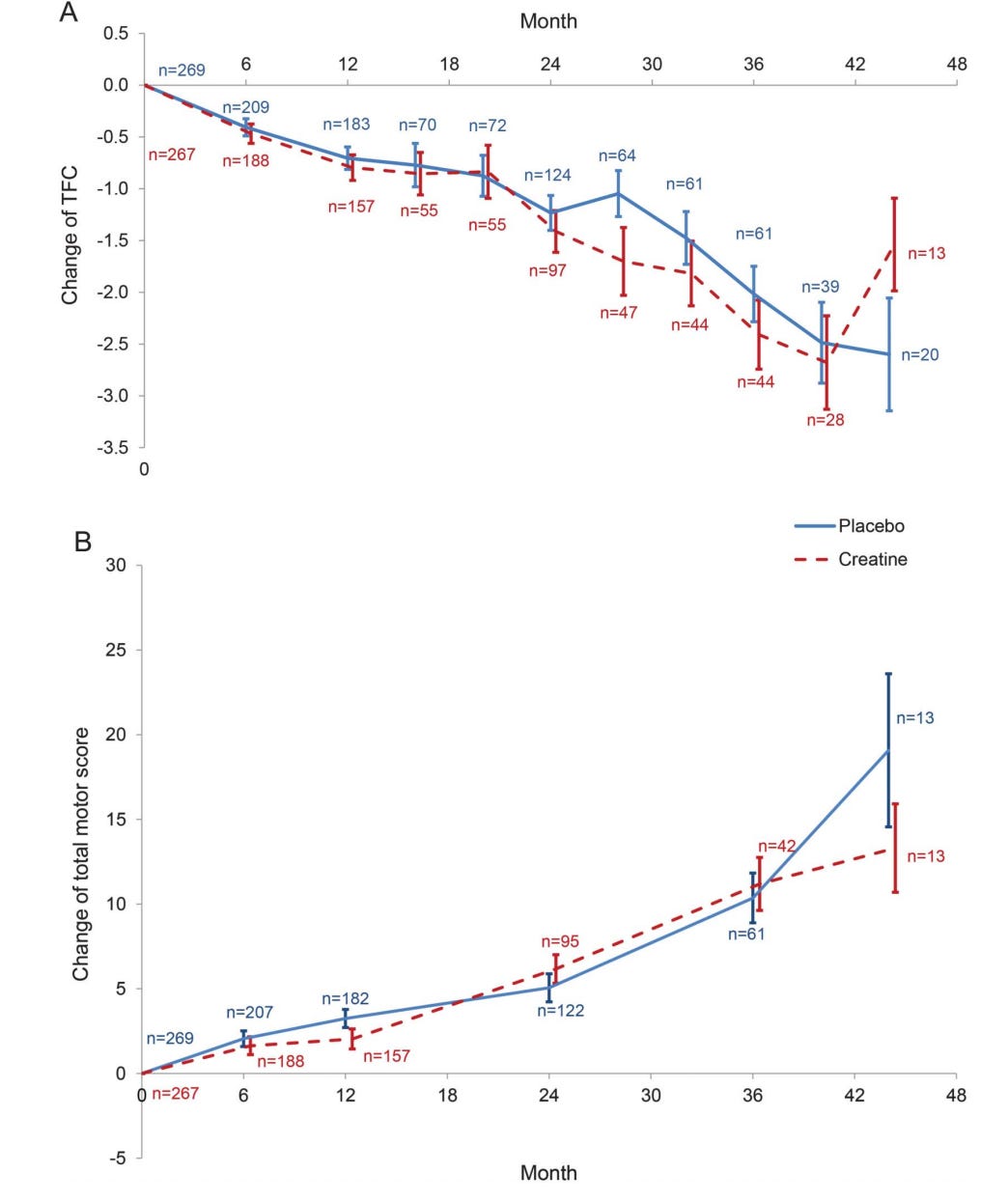
The CREST-E trial measured total functional capacity (TFC), which reflects the ability to work, manage finances, perform daily activities, and live independently, as well as motor function, including difficulties with movement and coordination. Both groups experienced declining functional capacity and worsening movement symptoms over time, with no convincing evidence that creatine slowed disease progression. Although the creatine group appeared to have somewhat better motor scores at the final assessment, very few participants remained at that point, making the difference unreliable.
These trials had important strengths: large samples, rigorous randomized designs, extended follow-up, and clinically meaningful outcomes.
Their limitation is equally important: neither studied Alzheimer’s disease.
Nevertheless, they demonstrate a fundamental lesson: improving a plausible cellular energy pathway does not necessarily protect against neurodegeneration.
For Alzheimer’s disease, large randomized prevention trials of creatine are lacking. There is also no convincing evidence that daily supplementation specifically protects people carrying APOE4.
That is the central finding for my patient.
Where does creatine have stronger evidence?
The strongest clinical evidence concerns muscle strength when creatine is combined with resistance training.
A 2017 meta-analysis pooled 22 randomized trials involving 721 middle-aged and older adults. [6]
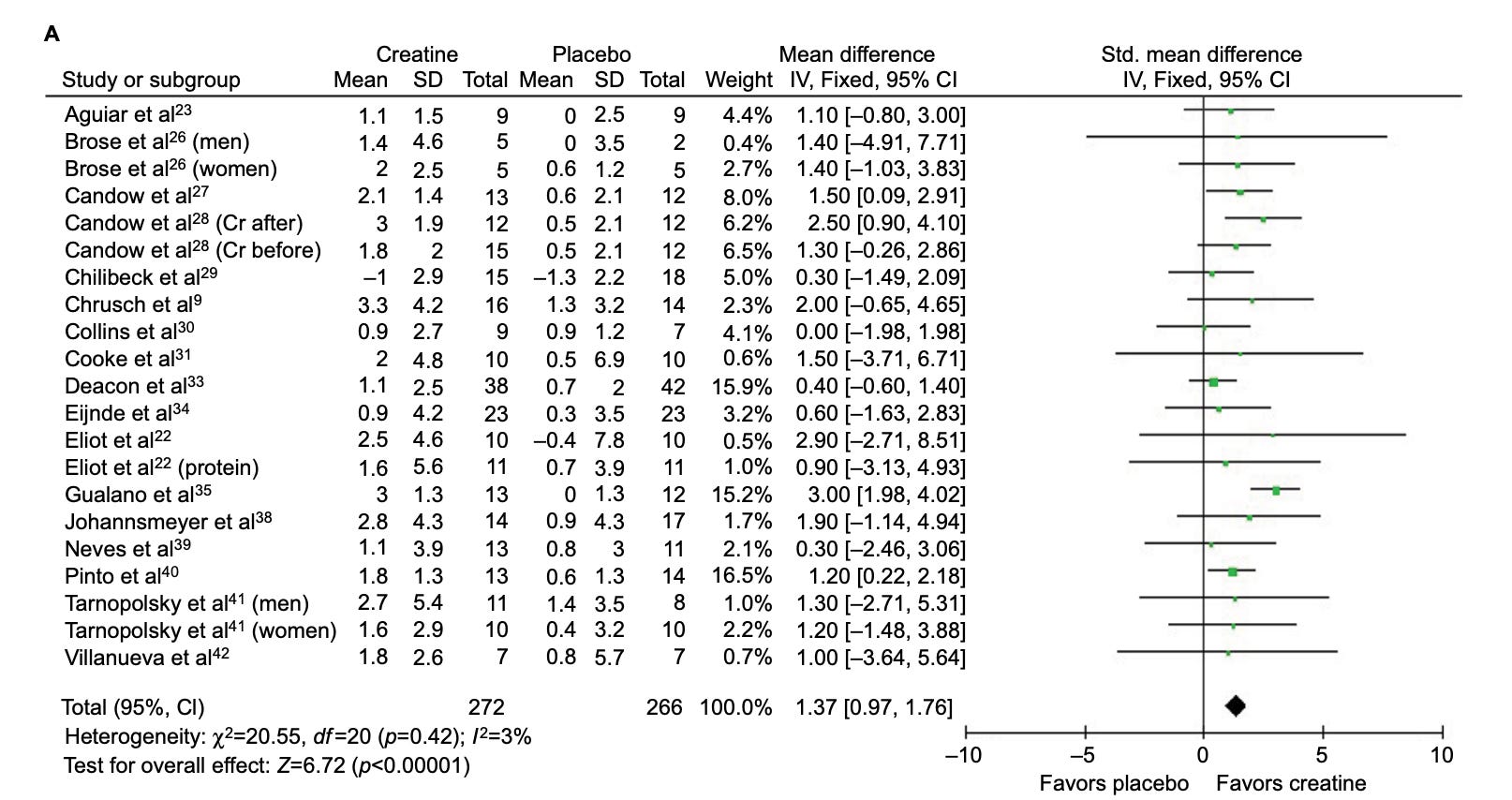
This figure is called a forest plot and summarizes studies comparing creatine with placebo during resistance training in older adults. Each green square represents the result of one study, while the horizontal line extending from it shows the 95% confidence interval, indicating the uncertainty around that result. The vertical line at zero represents no difference between creatine and placebo. When a horizontal line crosses zero, the study's results are compatible with both a benefit and no benefit (or even a disadvantage), so that individual study does not demonstrate a statistically significant difference.
Many of the smaller studies cross zero because their results are imprecise. However, when the researchers combined all the results, the black diamond at the bottom was entirely to the right of zero, showing an average additional gain of 1.37 kg (approximately 3 pounds) of lean tissue with creatine (95% confidence interval: 0.97–1.76 kg).
The combined result was statistically significant, even though many individual studies were not. Importantly, some of this gain may reflect increased water stored inside muscle cells rather than new muscle tissue.
A 2026 meta-analysis of 11 randomized trials reached a more cautious conclusion. Creatine provided a small additional strength benefit during resistance training, but improvements in muscle mass and everyday physical function were uncertain. [7]
Muscle mass, muscle strength, and physical function are not interchangeable.
For healthy aging, the most important questions are whether someone can rise from a chair, climb stairs, walk safely, and remain independent.
Does creatine help older adults who are already struggling with these activities?
Does creatine add benefits for older adults with muscle weakness?
A particularly informative randomized trial was published in Clinical Nutrition in 2021.
Researchers enrolled 200 older adults, averaging 72 years of age, who were classified as prefrail or frail.
Frailty describes increased vulnerability to illness and physical stress, often accompanied by weakness, slower movement, and reduced physiological reserve.
For 16 weeks, all participants performed supervised resistance training twice weekly.
The investigators tested whether supplements—including creatine, whey protein, soy protein, and leucine, an amino acid involved in muscle protein synthesis—improved the response to exercise.
The study consisted of several randomized, double-blind comparisons. The creatine comparison included women, while the overall study included both women and men.
Resistance training improved muscle mass and function, but the supplements did not produce a clear additional benefit. [8]
The study’s strengths included supervised exercise, randomized comparisons, and a population already vulnerable to muscle decline.
Its limitations also matter. The 200 participants were distributed among several comparisons, meaning the creatine-specific analysis involved fewer people. Most participants were prefrail rather than severely frail, and follow-up lasted only four months.
Therefore, the trial cannot exclude smaller benefits or establish that creatine is ineffective in every older person with muscle weakness.
Still, it challenges the assumption that adding more protein or creatine necessarily produces better results.
Would an older adult with weak legs benefit more from creatine than someone who already has well-developed muscles?
We do not know.
Greater weakness might leave more room for improvement. Conversely, frailty and underlying illness could reduce responsiveness to supplementation.
The trial reinforces something more fundamental: resistance training itself can improve muscle function, even when additional supplements offer little measurable benefit.
Why might adding more nutrients fail to produce additional gains?
Anabolic resistance: Why aging muscles become harder to maintain
Our muscles are constantly being remodeled.
Old proteins are broken down through catabolism, while new proteins are produced through anabolism.
In younger adults, eating protein and exercising stimulate muscle protein synthesis, helping maintain and repair muscle tissue.
With aging, muscles may become less responsive to these signals. Researchers call this anabolic resistance.
An older person’s muscles may produce a smaller muscle-building response to the same amount of protein or exercise.
Over time, this can contribute to sarcopenia, the age-related decline in muscle strength and mass.
Why does anabolic resistance develop?
Physical inactivity, insulin resistance, changes in mitochondrial function, and alterations in the nerves controlling muscles may all contribute.
Another proposed mechanism is chronic, low-grade inflammation, sometimes called inflammaging.
Inflammatory signals may interfere with pathways involved in muscle growth and repair. Inflammation is not the sole cause of anabolic resistance, but it helps explain why muscle aging involves more than insufficient protein or energy.
Protein supplies the building materials for muscle repair. Creatine helps regenerate energy. Neither necessarily corrects the metabolic and inflammatory conditions that make aging muscles less responsive.
Resistance training remains essential because it directly stimulates muscles to adapt.
But could improving the overall dietary pattern address several of these processes simultaneously?
Can a whole dietary pattern offer broader benefits?
A Mediterranean-style diet is one example of a varied dietary pattern rich in vegetables, legumes, whole grains, fruits, nuts, olive oil, and fish.
Together, these foods provide protein, fiber, unsaturated fats, and other nutrients that influence metabolism, vascular health, and inflammatory signaling.
One potentially important connection involves the gut microbiome.
Intestinal bacteria metabolize dietary fiber and produce substances, including short-chain fatty acids, that interact with immune cells and metabolic pathways.
Researchers are investigating whether these microbial processes influence chronic inflammation and anabolic resistance.
What did the NU-AGE study find?
The European NU-AGE study investigated a one-year Mediterranean-style dietary intervention in older adults from five countries.
A detailed microbiome analysis included 612 participants.
The dietary intervention changed gut bacterial communities. Bacteria associated with greater adherence to the diet were also associated with more favorable measures of physical function, lower frailty scores, and reduced inflammatory markers. [9]
These outcomes matter because they concern how older adults function, not simply how much muscle they have.
However, the findings require careful interpretation.
The study did not establish that the dietary intervention directly reduced frailty or that changing specific bacteria caused improvements in walking or strength. Those relationships were associations within a dietary intervention.
The larger PREDIMED-Plus randomized trial provides complementary evidence.
In an analysis involving 1,521 participants followed for three years, an intervention combining an energy-reduced Mediterranean diet with increased physical activity reduced fat mass and produced more favorable changes in relative lean mass than the comparison program. [10]
Its strengths included a substantial sample, randomized design, and longer follow-up. However, diet and physical activity changed together, so their individual contributions cannot be separated.
The study also did not establish that these changes prevented disability.
Who should take creatine, and what are the alternatives for healthy aging?
The NIH Office of Dietary Supplements and the Australian Institute of Sport recognize creatine’s benefits for repeated, high-intensity exercise and some adaptations to resistance training. [1, 12]
Neither recommends that everyone over 50 take creatine for longevity or Alzheimer’s prevention.
Who might benefit?
Creatine is most reasonably considered by healthy adults who regularly perform resistance training and want modest additional improvements in strength or exercise performance. [6, 7]
For an older person, this need not mean lifting heavier weights at a gym. Resistance exercise can include bands, body-weight movements, home exercises, or supervised strengthening programs.
Practical goals may include:
Improving leg strength for climbing stairs or rising from a chair.
Maintaining the physical capacity needed for walking and carrying groceries.
Progressing through a resistance-training program.
Rebuilding strength during supervised rehabilitation after inactivity, although creatine’s additional benefit in this setting remains uncertain.
These are worthwhile goals, but the evidence that creatine adds benefits for walking, chair-standing, and independence is less certain than its effect on strength. [7, 11]
People with persistent weakness, falls, or difficulty walking should also be evaluated for underlying medical causes.
What form, dose, and duration make sense?
Creatine monohydrate, 3–5 grams daily, is the best-studied form and a conventional maintenance dose. [1, 12]
A loading phase is unnecessary. Without loading, muscle creatine stores generally increase toward saturation over approximately four weeks.
Taking creatine before or after resistance training is reasonable. Studies have not established a convincing advantage for either approach.
For convenience, it can be taken with a regular meal or small protein shake after exercise. Precise timing matters less than consistent supplementation.
For older adults considering creatine, a practical goal is to assess strength and physical performance after approximately 8–12 weeks of consistent training.
Improvements might include completing more repetitions, better leg strength, or easier completion of everyday movements.
This is a reasonable reassessment period, not a formally established treatment duration. Any gains may result primarily from the training program rather than creatine.
Continued supplementation should serve a meaningful purpose, rather than becoming an automatic lifelong habit.
Who should avoid unsupervised use?
Creatine is generally well tolerated by healthy adults at conventional doses, but some people experience bloating, abdominal discomfort, or diarrhea, particularly with large single doses. [1]
Taking smaller doses with food may improve tolerance. Persistent symptoms are a reasonable reason to stop.
Creatine increases water stored within muscle cells, but conventional doses have not been shown to cause dehydration or require unusually high water intake. Normal hydration remains important.
People with kidney disease, uncertain kidney function, pregnancy or breastfeeding, or complex medical conditions should obtain individualized medical advice.
Creatine can increase serum creatinine, a blood measurement used to estimate kidney filtration, without necessarily causing kidney injury. Clinicians may use alternative measurements, such as cystatin C, when results are unclear.
For people taking creatine primarily to prevent Alzheimer’s disease, including APOE4 carriers, there is no convincing clinical evidence supporting that indication.
What should everyone prioritize?
Whether or not someone takes creatine, the broader foundation for muscle and brain health includes regular resistance training, aerobic activity, balance exercises, adequate protein, and a varied nutritious diet.
For adults who can safely exercise, public-health guidance generally recommends muscle-strengthening activity at least twice weekly, alongside regular aerobic activity.
Exercises that challenge the legs and balance are particularly relevant for maintaining independence.
A Mediterranean-style dietary pattern provides one practical example: vegetables, fruit, beans, lentils, whole grains, nuts, olive oil, and fish.
These foods supply a combination of nutrients that cannot be reproduced by one supplement. Fiber-rich foods support the gut microbiome, while healthy fats and diverse plant foods contribute to metabolic and vascular health.
Good sleep, avoiding smoking, and managing blood pressure, cholesterol, and diabetes are also important for protecting the aging brain.
Creatine may improve one part of the response to exercise. A healthy dietary pattern and regular activity support multiple biological systems simultaneously.
What remains uncertain?
Creatine has a clear biological function and reasonably good evidence for modest additional strength gains during resistance training.
We still do not know whether people with low muscle mass, weak legs, or frailty benefit more than already-strong adults. Nor have large trials established that supplementation prevents falls, disability, or loss of independence over many years, with resistance training remaining the key advice.
For brain health, the uncertainty is greater. Cognitive trials remain relatively small and inconsistent, and large randomized trials demonstrating Alzheimer’s prevention are lacking.
The dietary-pattern literature also has limitations. Associations between gut bacteria, inflammation, and physical function do not establish that changes in the microbiome caused better outcomes.
Future trials should measure what patients care about: walking, independence, falls, memory, and long-term cognitive decline.
The goal is to preserve the strength, mobility, memory, and independence that make a longer, healthier life possible.
Take-home messages
Creatine helps cells rapidly regenerate energy, but this does not establish protection against Alzheimer’s disease.
The strongest evidence supports modest additional strength gains when creatine is combined with resistance training. Benefits for everyday physical function are less certain.
Aging muscles can develop anabolic resistance, making them less responsive to protein and supplements. Chronic inflammation is one possible contributor.
Creatine may be useful for selected older adults pursuing strength-related goals, including maintaining leg strength for everyday activities. It is not necessary for everyone over 50.
A varied dietary pattern combined with regular exercise supports multiple biological systems involved in muscle and brain health.
Daily creatine has not been shown to prevent Alzheimer’s disease or specifically protect people carrying APOE4.
References
National Institutes of Health, Office of Dietary Supplements. Dietary Supplements for Exercise and Athletic Performance: Health Professional Fact Sheet. https://ods.od.nih.gov/factsheets/ExerciseAndAthleticPerformance-HealthProfessional/
Xu C, et al. The effects of creatine supplementation on cognitive function in adults: a systematic review and meta-analysis. Frontiers in Nutrition. 2024. https://doi.org/10.3389/fnut.2024.1424972
EFSA Panel on Nutrition, Novel Foods and Food Allergens. Creatine and improvement in cognitive function: Evaluation of a health claim. EFSA Journal. 2024. https://doi.org/10.2903/j.efsa.2024.9100
Writing Group for the NET-PD Investigators. Effect of creatine monohydrate on clinical progression in patients with Parkinson disease: a randomized clinical trial. JAMA. 2015. https://doi.org/10.1001/jama.2015.120
Hersch SM, et al. The CREST-E study of creatine for Huntington disease: a randomized controlled trial. Neurology. 2017. https://doi.org/10.1212/WNL.0000000000004209
Chilibeck PD, et al. Effect of creatine supplementation during resistance training on lean tissue mass and muscular strength in older adults: a meta-analysis. Open Access Journal of Sports Medicine. 2017. https://doi.org/10.2147/OAJSM.S123529
Yao L, Yang D, Gao J. Effects of resistance training combined with creatine supplementation on muscle strength, physical function, and muscle mass in older adults: a systematic review and three-level meta-analysis. Frontiers in Nutrition. 2026. https://doi.org/10.3389/fnut.2026.1919884
Roschel H, et al. Supplement-based nutritional strategies to tackle frailty: A multifactorial, double-blind, randomized placebo-controlled trial. Clinical Nutrition. 2021. https://doi.org/10.1016/j.clnu.2021.06.024
Ghosh TS, et al. Mediterranean diet intervention alters the gut microbiome in older people reducing frailty and improving health status: the NU-AGE 1-year dietary intervention across five European countries. Gut. 2020. https://doi.org/10.1136/gutjnl-2019-319654
Konieczna J, et al. An energy-reduced Mediterranean diet, physical activity, and body composition: An interim subgroup analysis of the PREDIMED-Plus randomized clinical trial. JAMA Network Open. 2023. https://doi.org/10.1001/jamanetworkopen.2023.37994
Davies TW, et al. Creatine supplementation for optimization of physical function in the patient at risk of functional disability: A systematic review and meta-analysis. Journal of Parenteral and Enteral Nutrition. 2024. https://doi.org/10.1002/jpen.2607
Australian Institute of Sport. Creatine supplementation: How and when do I use it? https://www.ausport.gov.au/ais/nutrition/supplements/group_a/performance-supplements2/creatine/how-and-when-do-i-use-it
Disclosure: This post contains partially AI-assisted text. All references were reviewed for accuracy. I have no relevant conflicts of interest. These opinions are mine and do not reflect the opinions of my employer. The goals of these posts are educational and do not substitute for medical advice.
Thank you for an excellent discussion. Speaks to me as a 67 y.o. male trying to make factually based health decisions.
Your efforts are much appreciated.